By management standards, we understand defined procedures and best pracitces that the power user follows when managing Jira.
Following best practices helps to:
- Avoid overwhelming administrative workload;
- Create accurate and realistic reports and analytics;
- Ensure the sustainable operation of the system;
While specific management standards may vary between organizations, it’s wise to start with aspects that have a broad impact.
What Types of Projects Are Created in the System?
Atlassian’s Cloud platform offers two different project types: team-managed and company-managed.
Team-managed projects may seem quick and convenient to set up but the configurations are isolated and limited.
Team-managed projects can quickly become a stumbling block when there’s a need to create cross-project reports, views, or analytics.
Can Any Configuration Elements Be Reused?
A new Jira project can be created based on another project’s settings, allowing you to reuse existing configurations in the system.
These are essentially template projects where tickets are not managed; their purpose is to serve as the basis for creating new projects.
Example Scenario: A company that offers software development services distinguishes between large-scale and small-scale development projects. They have decided to implement Jira for project management.
In the example scenario above, a good starting point for Jira implementation would be to map the processes for both large-scale and small-scale developments.
Additionally, a power user needs input on data fields, permissions, and notification requirements.
This overview serves as the basis for configuring template projects, which are then used to create new development projects.
Project templates significantly reduce administrative overload and prevent the creation of redundant, duplicate configuration elements.
What is the Frequency of Jira Cleanups?
Regular cleaning of Jira ensures optimal system hygiene.
It’s advisable to follow the principle that the larger the company and the more Jira projects there are, the more frequently cleanup activities should be performed.
The recommended frequency for Jira clean-ups is at least 1-2 times per year.
What are the Language Guidelines for Naming Configuration Elements?
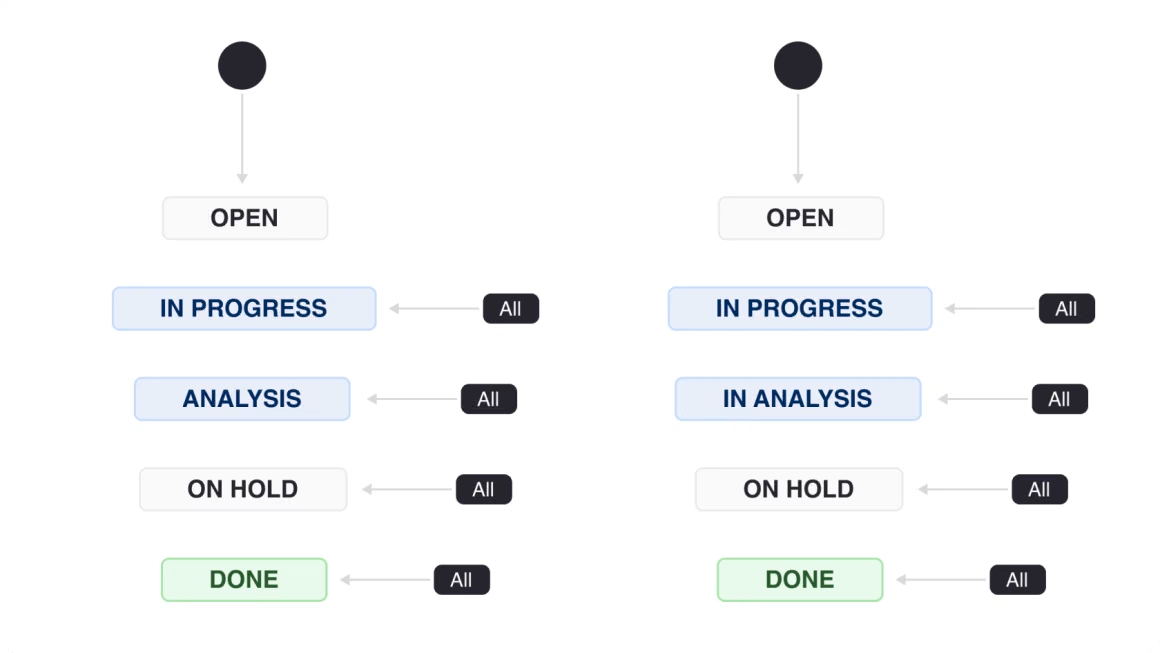
We’ve seen Jira environments where configuration elements like workflow statuses, custom fields and issue are created in multiple languages.
While it may not always be feasible to use only one language, it is helpful to establish a primary and secondary language. This approach makes working in Jira more intuitive for end users.
Groups or Roles?
Groups and roles are primarily used for configuring permissions, notifications, and issue-level security. Both groups and roles have their advantages, but roles allow for more flexible management.