
Organisational Development for Successful Digital Transformations – a Perspective Based on Key Capabilities
Recently, at the end of a public sector project, I sat down with a client to discuss planned activities. During our discussion, the client asked: "As a policy-maker, how am I supposed to manage an IT project and guide its needs? I know my field very well, but I know much less about IT development." This problem - that business specialists are expected to have a high level of IT project management skills - can affect many business professionals. Due to digitalisation the business field specialists are increasingly expected to possess IT-related capabilities. Here, we will explore how to address this challenge.
The solution to this concern may lie in selecting an appropriate operating model (rather than hastily choosing a project development partner). An ICT operating model, in brief, is an approach to service management aimed at creating value. A comprehensive approach encompasses categories such as
- organisation and people,
- information and technology,
- partners and suppliers,
- and value streams and processes.
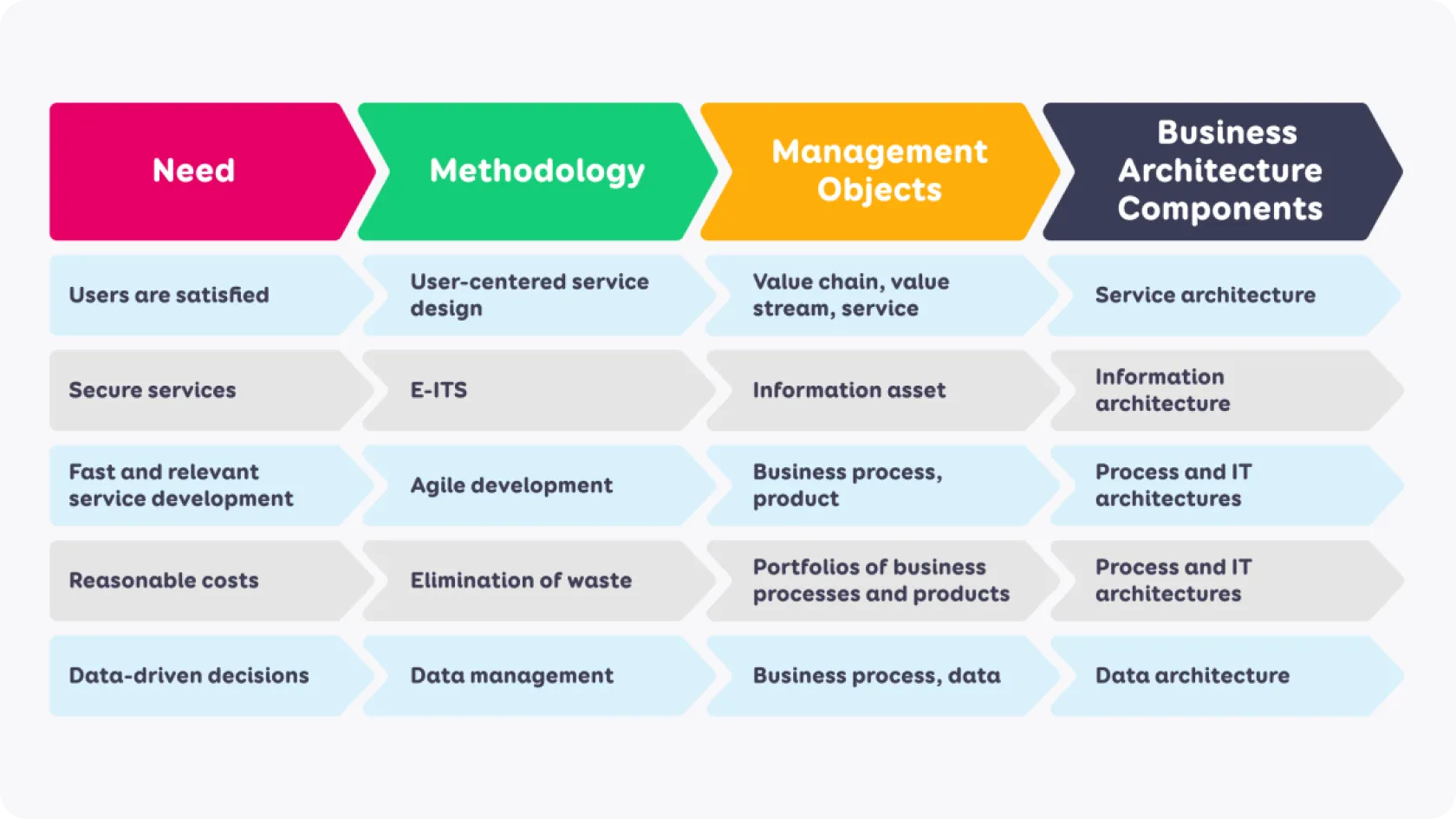
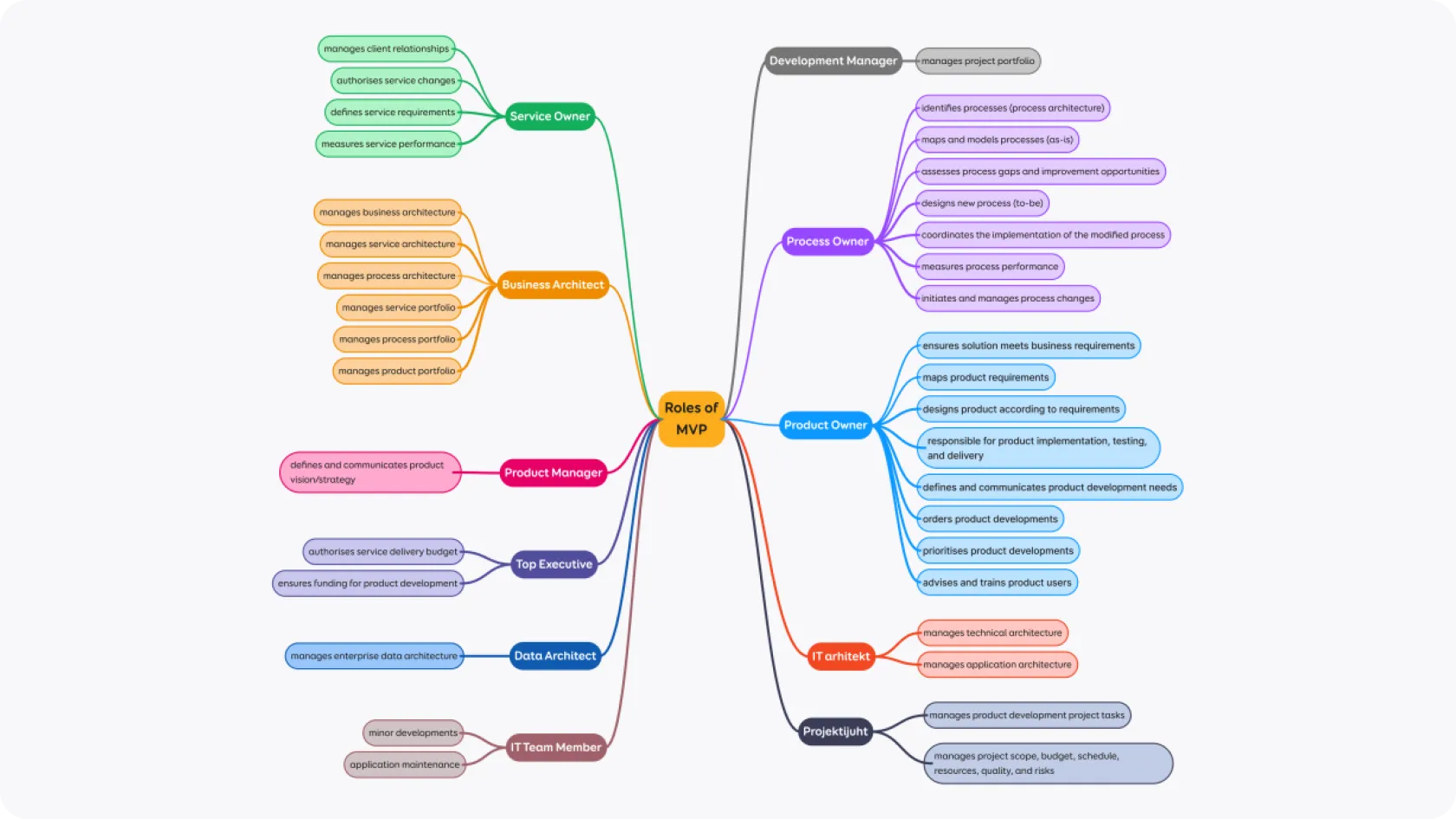
One central and crucial aspect, which we will focus on in this article, is the roles and responsibilities matrix that defines management objects and the capabilities required for managing them. In 2022-23, our long-term partner Mihkel Lauk conducted an analysis focusing on the ICT development operating model and we use his work as a basis for this article. Although the project focused primarily on the public sector, the results are also applicable to the private sector.
Conclusion
In this article, we examined organisational work arrangements to support ICT development projects. The described lessons are relevant to both the public and private sectors. The main observations are as follows:
- The business is responsible for services: if an ICT component is necessary for providing the service, the business is also responsible for it. The business uses business architecture (consolidating various disciplines), for management.
- The business cannot handle all responsibilities alone: it must have different capabilities available through other specialists.
- The operating model defines the minimum set of roles and responsibilities necessary for an ICT development project. These include both the ones directly and indirectly linked to the project.
- Different organisational models can be used for ICT developments: these should be based on the organisation’s structure. Ideally, business and IT should be integrated.
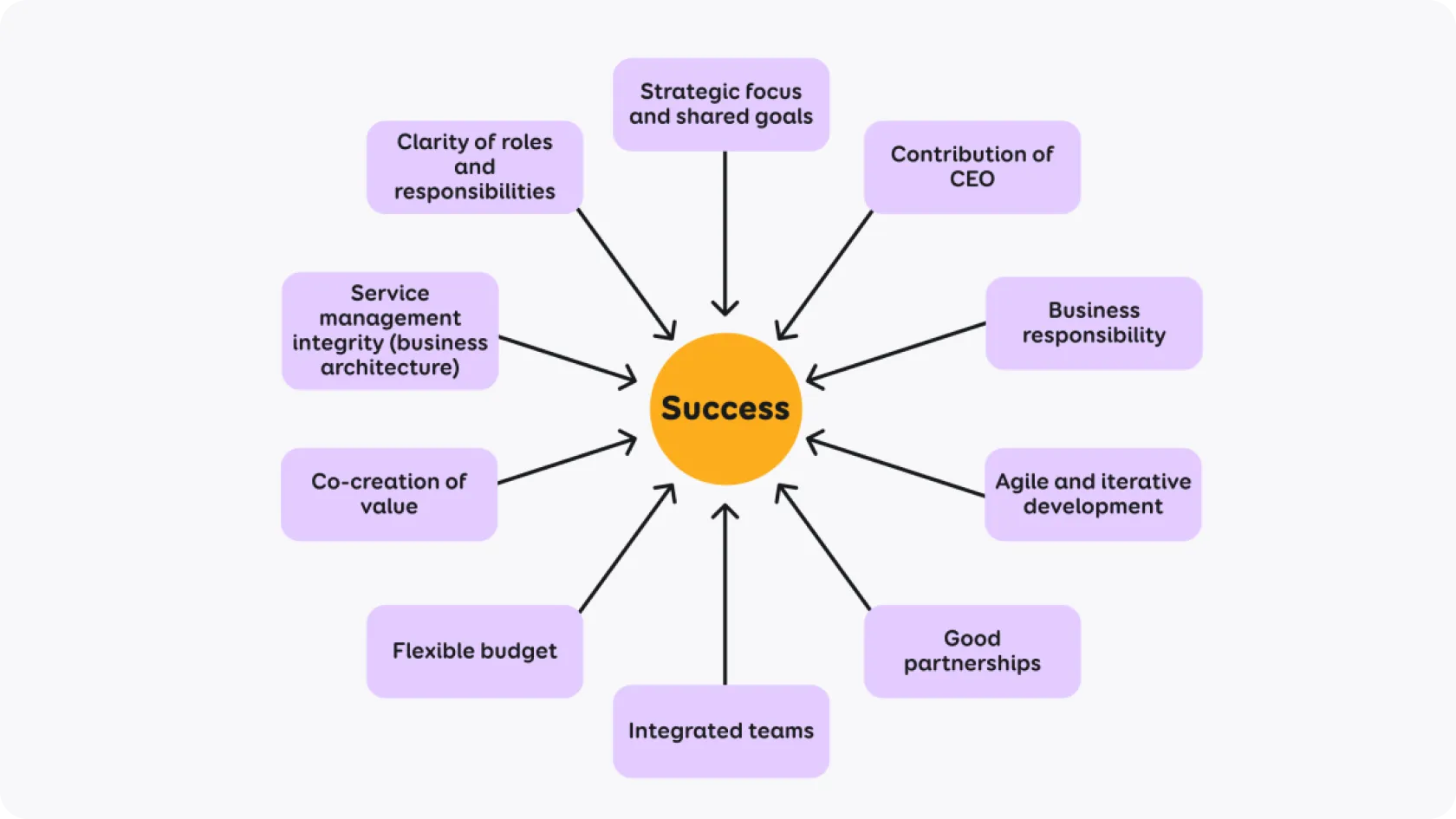
- There are specific criteria that must be met for a project to succeed. Meeting these criteria significantly increases the likelihood of project success. Most success criteria relate to various levels of ICT development project management.
- As a partner in a project where success conditions are unmet, the perceived risk of failure is higher: to successfully complete the project, it is practically mandatory to draw the business's attention to management deficiencies and unresolved responsibilities.
For a more detailed understanding of the project, we recommend reviewing the final report (in Estonian) on the Ministry of Finance's website.
Would you like to discuss your ideas?
You can contact us at any stage of the project - from the development of the idea to the creation and evaluation of new digital solutions.

Get in touch
Write or call, and together, we will find the best way to bring your idea to life. We will reply shortly, and our experienced team will ensure that the project will succeed from the very first idea to the final execution.