
Three options to optimize your company's processes and attain its business objectives using a configuration management database
A configuration management database (CMDB) can serve various purposes. The following article summarizes several use case examples that illustrate the effectiveness of a CMDB in implementing a company's processes and business goals.
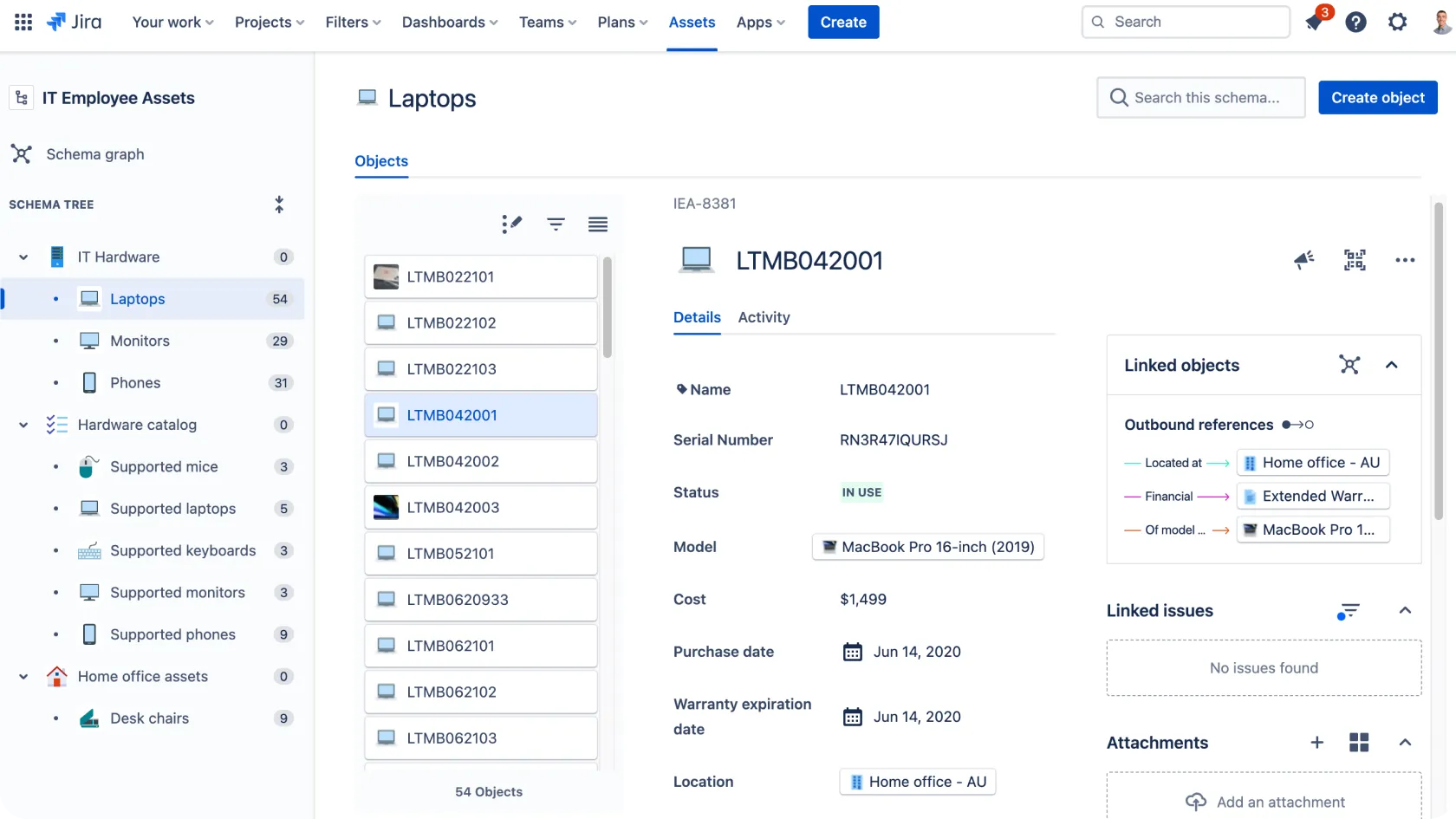
The examples are based on the CMDB built into the Atlassian Assets application.
What is configuration management?
Configuration management can be defined in many ways. In the context of a CMDB, it is about defining and documenting the functional and physical characteristics of configuration elements.
By nature, it is also part of change management, which includes configuration changes to IT systems during the system's life cycle, such as implementing new software or conducting upgrades.
How to choose a CMDB application?
There are many applications on the market for managing a CMDB. When making a choice, it is worth considering some aspects, like:
- How are IT service management practices currently managed?
- Is the CMDB tool compatible with the application where IT service management practices are managed?
- Can you create multiple schemas to manage different asset categories?
- What are the options to configure permissions? Is it possible to grant permissions per schema and per object type? Are viewing and editing permissions differentiated?
- Does the tool support automation?
- Can you import data and integrate with external tools?
For Assets, its primary value stems from the following aspects:
- It's part of Jira Service Management - if your company already uses Jira Service Management, there is no need to purchase a separate application.
- Flexible scheme creation - Assets stands out by enabling the creation of an unlimited number of schemes to manage various asset categories.
- Detailed permission logic - within the scheme, viewing, changing, and administrative rights can be precisely regulated based on object type.
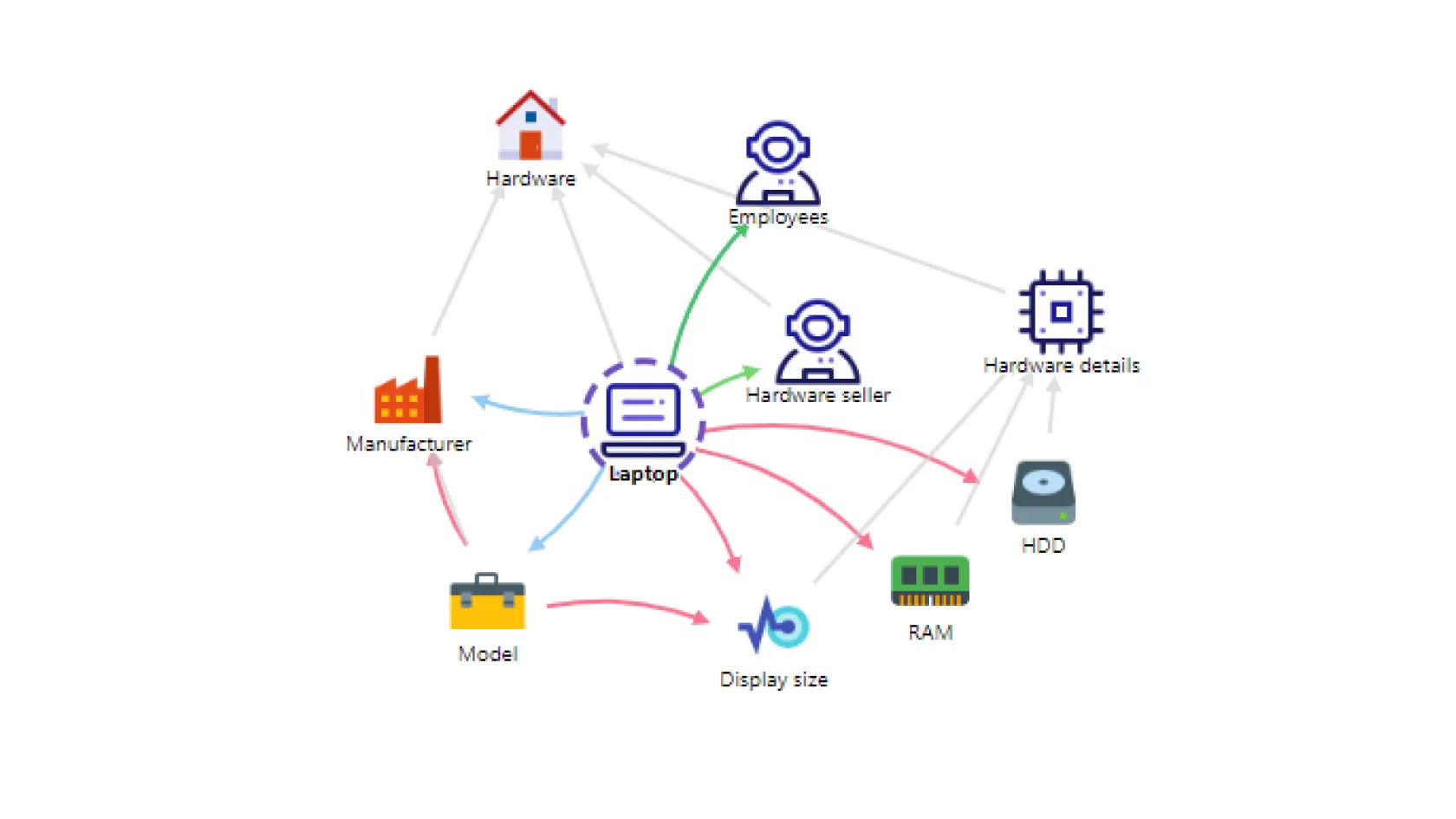
- AQL queries - it employs a specific query language to establish relationships between objects.
- Automations - Assets features custom automations that streamline database maintenance and reduce manual workload.
- Import and integration options - Assets supports importing from CSV and JSON files, and it seamlessly integrates with external systems like AWS, Microsoft Entra ID (formerly Azure AD), and Google Cloud.
Achieving business goals with a CMDB
Businesses across diverse industries can gain significant advantages from implementing a configuration management database.
A well-executed CMDB serves as a foundational element for numerous processes and practices, contributing to the achievement of business goals.
For insights and practical recommendations on implementing a configuration management database, consider exploring the case study detailing the University of Tartu's experience in CMDB implementation.
Would you like to discuss your ideas?
You can contact us at any stage of the project - from the development of the idea to the creation and evaluation of new digital solutions.

Write or call, and together, we will find the best way to bring your idea to life. We will reply shortly, and our experienced team will ensure that the project will succeed from the very first idea to the final execution.