Data-driven UX: Balancing quantitative and qualitative insights for a better user experience in EFSA case-study
In user experience (UX) research, combining qualitative and quantitative methods is one of the most effective ways to uncover both key insights and understand more subtle usability issues. Combining both approaches in a single project strengthens an evaluation by allowing the strengths of one methodology to compensate the weaknesses of the other and vice versa.
Recently, we in Trinidad Wiseman conducted a UX research for The European Food Safety Authority (EFSA) by using this combined methodology approach. The project explored how users navigate, search, and interact with various EFSA's web resources to access its scientific output, including research papers, scientific opinions, reports, guidance documents, and other publications.
Looking to design digital services that truly meet user needs through data-driven insights? At Trinidad Wiseman, we conduct user research, business and pre-analysis, and help design user-friendly solutions – just like in this EFSA project, where we combined quantitative and qualitative methods.
Problem statement and objectives of the EFSA project
The European Food Safety Authority (EFSA) is the European Union (EU) agency responsible for delivering independent scientific advice and communicating about current and emerging risks in the food chain.
EFSA contributes to protecting human life and health while considering animal health and welfare, plant health, and the environment. It provides independent and transparent scientific advice through numerous research activities, producing a large volume of scientific output relevant not only to industry players but also to academics, the press, and the general public.
Because of abundance of EFSA publications several platforms were created in effort to manage the important documentation and organize it in a logical and structured way:
- OpenEFSA - a portal developed by EFSA to provide stakeholders with a range of additional services and tools aimed at enhancing the transparency and accessibility of EFSA’s work. It serves as a centralized platform where all information related to EFSA’s risk assessments, including the data and studies used, is made available in one place for the first time. This initiative supports greater openness and usability for industry professionals, academics, and the public.
- EFSA Journal - an open-access, free-of-charge online scientific journal on external platform of Wiley Online Library that publishes the scientific outputs of the European Food Safety Authority (EFSA), which is the keystone of European Union (EU) risk assessment regarding food and feed safety.
- EFSA Publications - EEFSA produces hundreds of publications every year, both scientific and corporate, and they are gathered and categorized on EFSA webpage under Publications menu item.
- EFSA Guidance - EU legislation and EFSA guidance documents detail how to compile dossiers for food contact material applications and what type of scientific data and other information must be included. Nested on EFSA webpage under the Guidance menu item.
However, with big volumes of data comes big level of complexity that can sometimes cause users experience confusion due to occasional duplication of information, reliance on imperfect search engines, and unclear distinctions between platforms with seemingly similar goals. This can lead to frustration and inefficiencies, slowing down users' ability to navigate and access EFSA’s publications effectively, ultimately hindering productivity.
This is why, in 2023, EFSA conducted a user mapping and a survey to identify opportunities for optimizing the user experience across various digital platforms under its management. The survey revealed several key issues and these insights, particularly focused on Scientific Publications and Guidance documents, became our exciting new research project.
Methodological approach
Convergent (Parallel) mixed methods design is a type of mixed methods research in which you collect quantitative and qualitative data simultaneously and analyze them separately. After the analysis, you then combine or compare the results to draw a conclusion. Convergent design is used when there is a need to compare statistical results with qualitative findings to understand the research problem better.
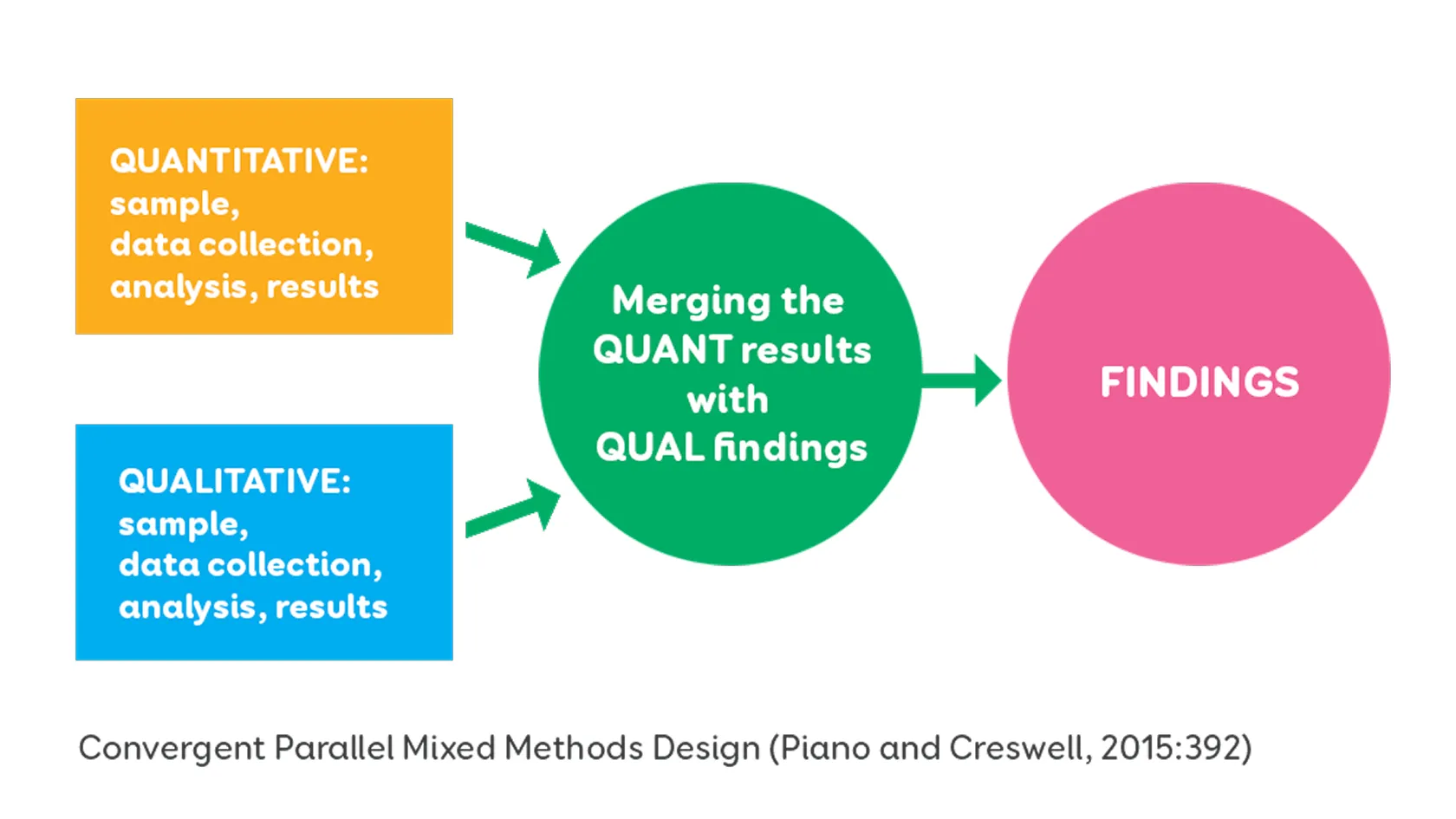
From the very beginning we realized that this is a perfect opportunity to apply this approach in EFSA study to ensure a well-rounded analysis. Quantitative methods would provide us measurable data, while qualitative approaches offered rich, contextual insights into user behavior and preferences.
Benefits of combining qualitative and quantitative methods
The strength of our research lay in the synergy between qualitative and quantitative methodologies. Here’s how this combination benefited the project:
- Comprehensive insights: Quantitative data from PIWIK analysis and tree testing identified broad patterns and trends, while qualitative methods, such as interviews and user testing, uncovered the underlying reasons behind these patterns.
- Data-driven validation: Quantitative findings provided a solid foundation for our recommendations, ensuring they were grounded in measurable evidence. At the same time, qualitative insights added depth and context to these findings.
- Balanced perspective: The combination of methods ensured that both user needs and organizational goals were taken into account. For example, while quantitative data highlighted heavily trafficked pages, qualitative research revealed that some of these pages were not meeting user expectations.
- Actionable recommendations: By integrating insights from both methodologies, we were able to deliver well-rounded, actionable recommendations that addressed both surface-level and deep-rooted issues.
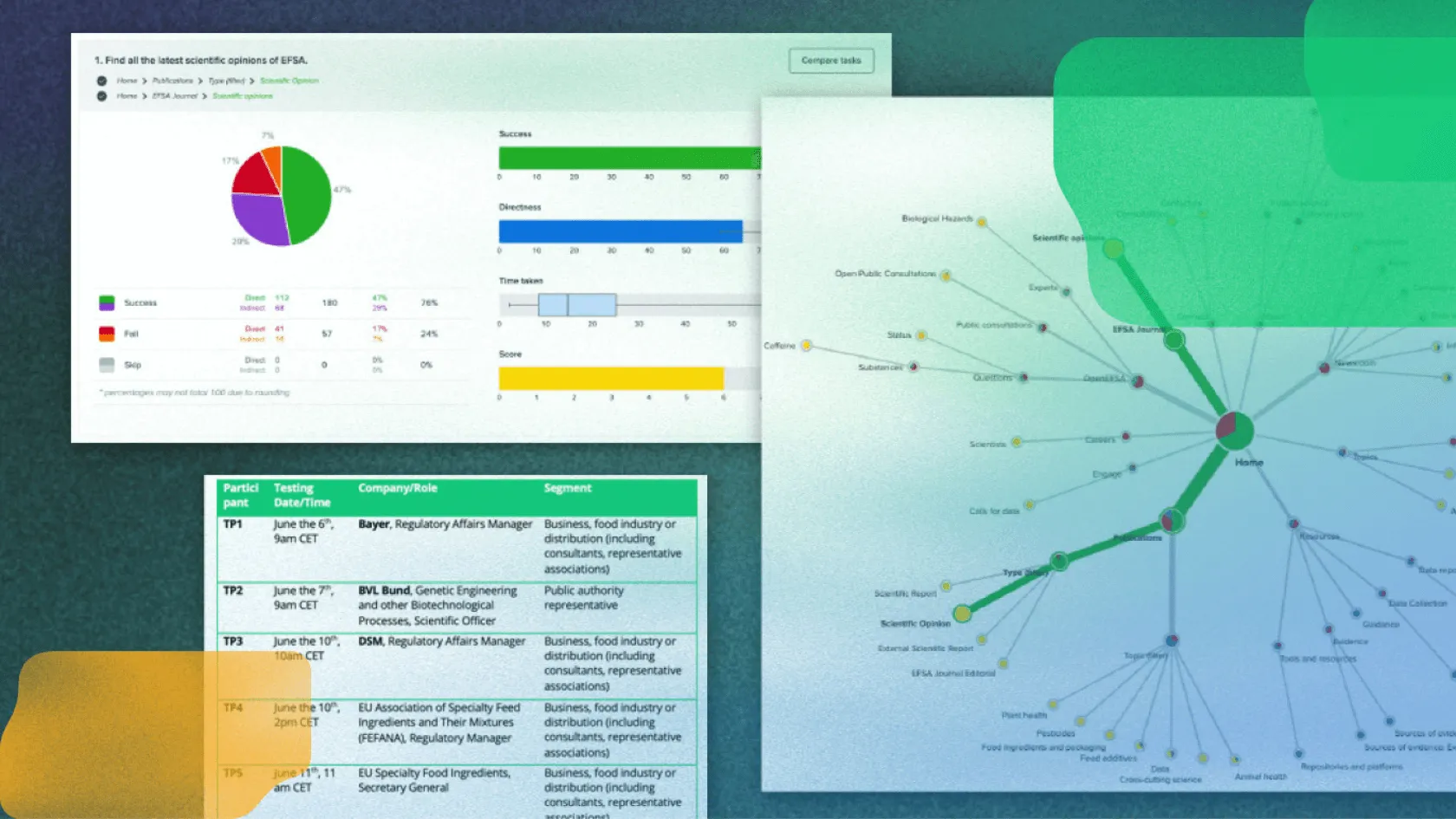
A view of EFSA user research data showing statistics, navigation flow, and test participant profiles with segment descriptions.
Key findings and takeaways
Some of the most significant findings from our research included:
- Navigation challenges: Users often struggled with unclear language of the navigation and a lack of intuitive pathways to key documents. On the other hand, some of the documents are duplicated and scattered in multiple places across the EFSA page, making it confusing to users.
- Search functionality: The existing search tool lacked robust filtering options, and the available filters were sometimes difficult to interpret or had similar names with different meanings.
- Labeling and tracking progress: Users would like to see the content clearly labelled with tags, color-coding or other interpretive means of UI. They would also like to see content labeled correspondingly to its status, e.g. "in-progress", "recently published", "latest version" or "soon-to-be-updated".
The final step of the project involved compiling our findings and recommendations into actionable deliverables. These included:
- A detailed final report document that outlined key findings from each approach in a great detail. Documents like this can be used for a long time after finalizing the project for further in-house developments and stakeholder consultations.
- An executive summary to provide people outside the project with a quick overview of the context, activities and outcomes.
- A Figma prototype showcasing redesigned navigation and interface elements to support the theoretical discussion of possible implementations by practical examples - a very effective way to illustrate potential solutions without overspending the budget that has proven its efficiency in the industry.
- A complete list of discovered issues, categorized by severity and impact with either proposed solutions or suggestions for further research and applicable methodology. Because an extensive theoretical work still has to lead to practical and actionable insights.
Conclusion
Our UX research project demonstrated the immense value of combining qualitative and quantitative methodologies. By leveraging the strengths of both approaches, we were able to provide the client with a comprehensive understanding of user needs and actionable insights for improvement. This hybrid approach not only uncovered usability issues but also revealed opportunities for enhancing user satisfaction and engagement.
As the digital landscape continues to evolve, the importance of a holistic approach to UX research cannot be overstated. Combining methodologies allows organizations to create solutions that are not only functional but also resonate deeply with users’ needs and expectations.
If you want to take your digital products to the next level with UX research, it’s worth considering a combined methodological approach. We can support you in this – whether through consultation, UX design, or full project guidance.
Would you like to discuss your ideas?
You can contact us at any stage of the project - from the development of the idea to the creation and evaluation of new digital solutions.

Get in touch
Write or call, and together, we will find the best way to bring your idea to life. We will reply shortly, and our experienced team will ensure that the project will succeed from the very first idea to the final execution.