Assessment of a child's need for assistance in the STAR information system: from project to long-term partnership
The development of digital services does not end with the introduction of a solution. In the public sector, systems must function for years, meet changing requirements, and support specialists in their demanding day-to-day work.
That is why it is important to have a partner who helps to develop the service over time, ensures that users are involved in planning changes from the very beginning, and makes sure that the technical solution is designed with both the specialist’s work and the needs of the person requiring assistance in mind.
In cooperation with the Social Insurance Board (SKA), Trinidad Wiseman has been contributing to the development of the STAR information system since 2021. It is a national register of social services and benefits (STAR), used by local governments and the Social Insurance Board to provide social benefits and services and to carry out case management.
During this time, we have been involved in the development of various assessment tools and processes. We also wrote about the update of the adult need for assistance (TAH) in an earlier blog post.
In the final stage, we focused on the comprehensive renewal of the child's need for assistance assessment and case management process. The goal was not only to add functionality, but also to make the workflow clearer, faster, and more secure.
Why this topic is important
In 2024, there were 3,903 children in need living in Estonia. Each case involves decisions that directly affect a child's well-being. The Child Protection Act sets clear deadlines and obligations, and local governments must decide within ten days of receiving a notification about a child in need of assistance whether it is necessary to initiate case management.
In this context, the information system must support the specialist, not add to their workload. Before the development, the process of assessing a child's need for assistance and preparing the case plan was divided between the STAR1 and STAR2 information systems. Some data had to be entered manually, and important information was located in different places. This meant extra steps and a higher risk of errors.
The challenge was not only technical. The question was how to bring the process, regulatory requirements, and the specialist’s work logic into one coherent whole.
From analysis to a future solution
We started by mapping the existing situation. In cooperation with the Social Insurance Board and representatives of local governments, we described the steps taking place both inside and outside the system and identified the main bottlenecks.
We then formulated a vision for the future. One of the most difficult tasks was to harmonise the adult and child assessment processes while taking into account the specific features of child assessment, such as questionnaires that depend on the child's age. The solution had to be logical, comparable, and flexible at the same time.
As a result of the analysis, we focused on two main directions:
- to bring the entire workflow of child protection workers fully into the STAR2 environment;
- to improve ease of use and reduce unnecessary steps.
Comprehensive assessment flow of a child's need for assistance in one system
The biggest change was moving the preliminary assessment of the child's need for assistance, the full assessment of the child's need for assistance, and the case plan action plan entirely into the STAR2 environment. Previously, the assessment process and the preparation of the case plan required moving between STAR1 and STAR2. As a result of the development, the entire process now takes place in one environment. The specialist no longer has to move between systems, and the workflow is logical and consistent.
We created an option to transfer relevant information from the previous assessment into the new assessment.
This means that in repeated cases, the specialist does not have to start from scratch but can rely on previous data. This reduces duplicate data entry and the risk of errors, and allows the assessment results of the same child to be compared over time.
When creating a case plan, the system automatically generates an action plan template based on the areas of life in which problems were identified. This allows the specialist to focus on substantive decisions rather than technical steps.
User-friendliness as the basis for quality work
The time of a child protection worker is a limited resource. Every additional step in the system means less time for substantive work.
During development, we turned several free-text fields into drop-down menus to speed up data entry and standardise data. We also created the option to display the results of the preliminary assessment within the assessment itself, so that important information is immediately visible.
In the case plan action plan, when adding the task of applying for support, an application for support can also be submitted in the same view. Previously, it was necessary to exit the case plan and move to a separate application view. Now, all activities take place within one logical flow, which reduces interruptions in the workflow and makes the process smoother.
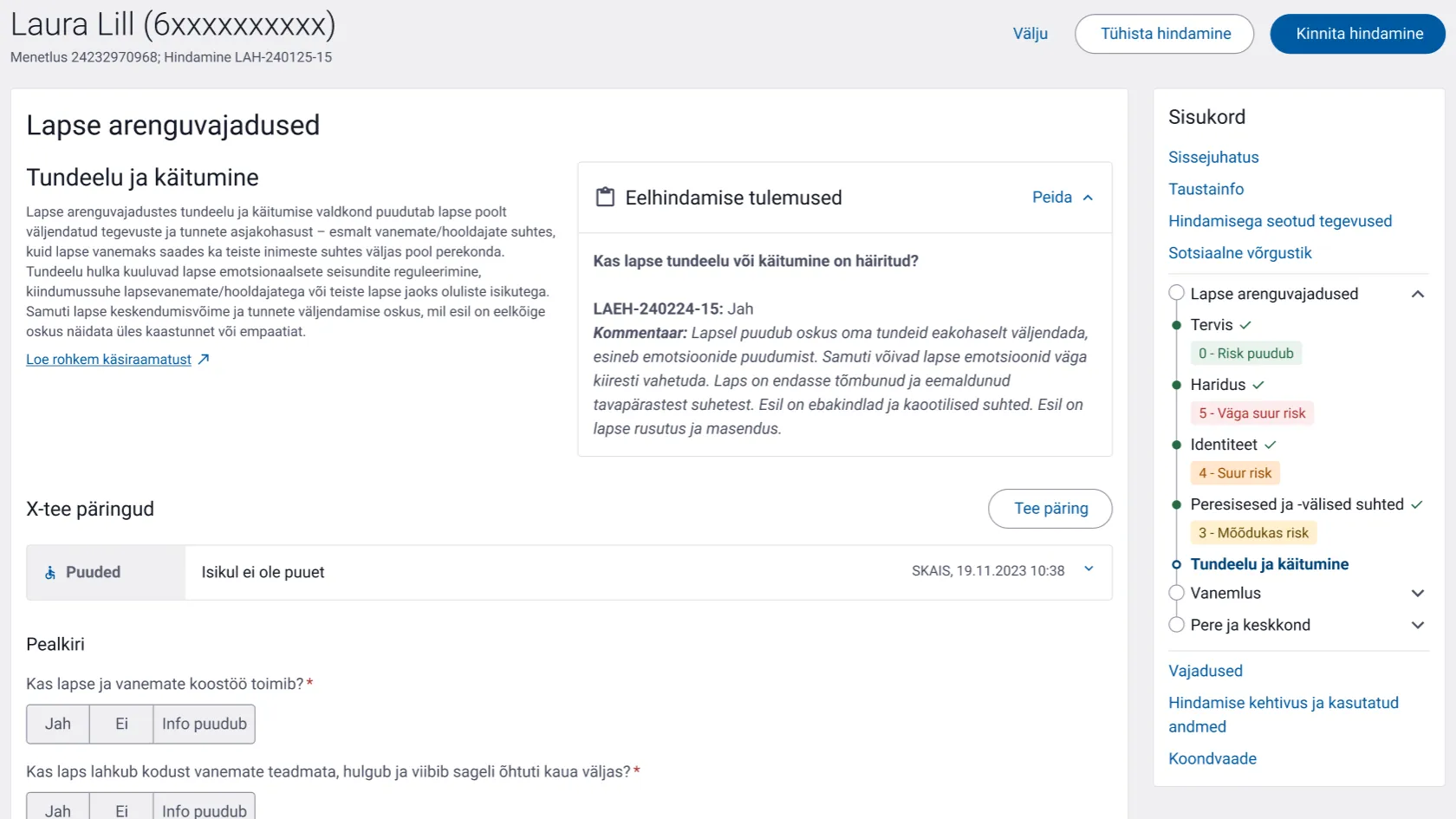
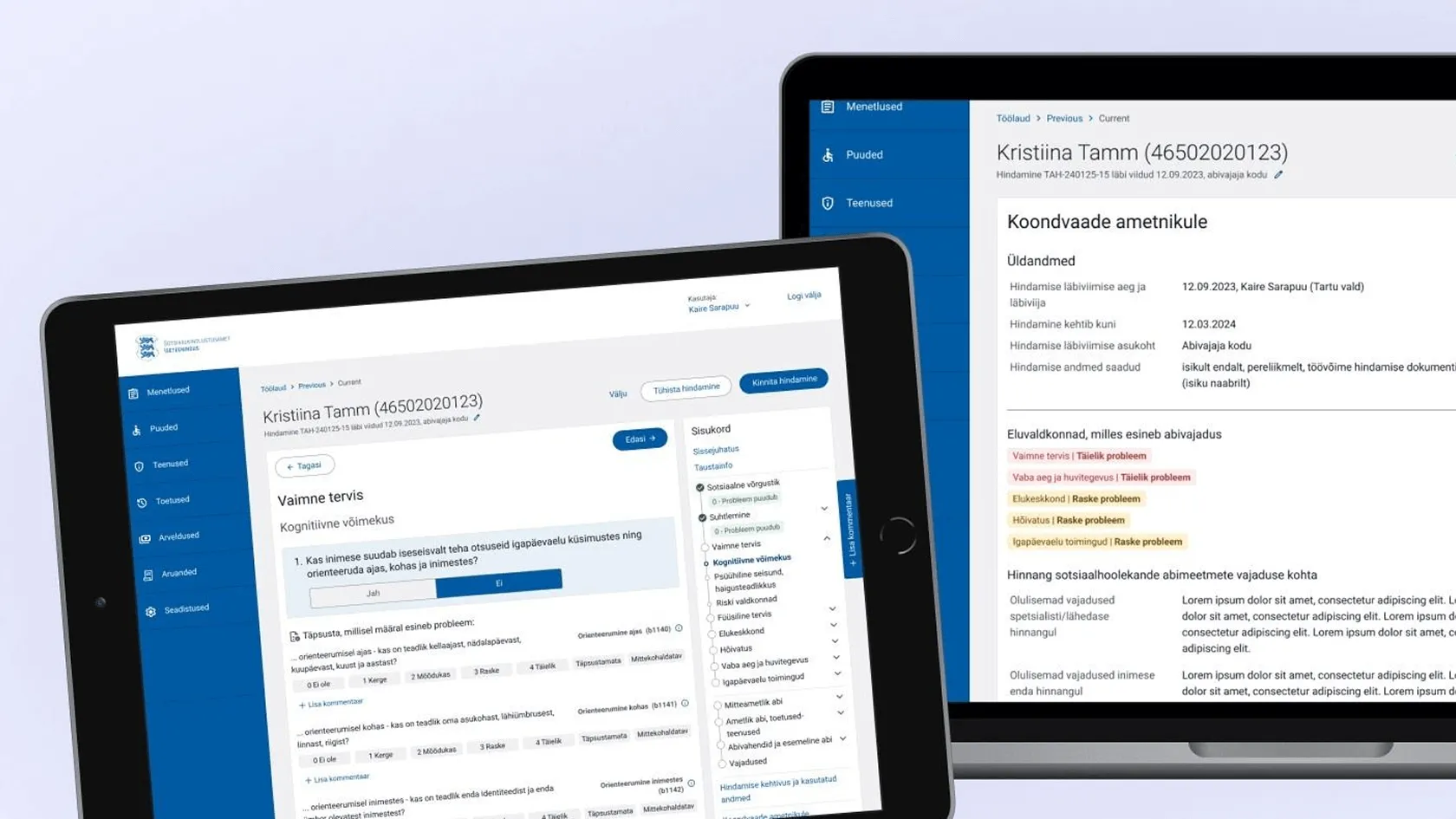
Results of the preliminary assessment in the assessment of the child's need for assistance. STAR screenshot.
Safe and controlled change
Public sector information systems must meet the requirements of security, accessibility, and data protection. During the project, we carried out manual and automated testing, load testing, and accessibility testing in accordance with the WCAG (Web Content Accessibility Guidelines). We also supported customer acceptance testing.
Changes had to be controlled and traceable. Our role was not only to develop new functionalities, but also to ensure that the solution would be reliable and compliant with current requirements in the long term. The result is a more consistent process that requires less manual work and is easier to monitor, supporting both the specialist’s daily work and the organisation’s management responsibilities.
Although this development took place in the public sector, these challenges are also familiar to many private sector organisations. Systems that have become layered over time, manual work, scattered information, and growing compliance requirements are not specific to a single field.
An approach based on long-term partnership helps to manage this kind of complexity, regardless of the sector. The same logic applies more broadly to the development of digital services and the renewal of information systems, where user experience, technical architecture, and regulatory compliance must be brought together.
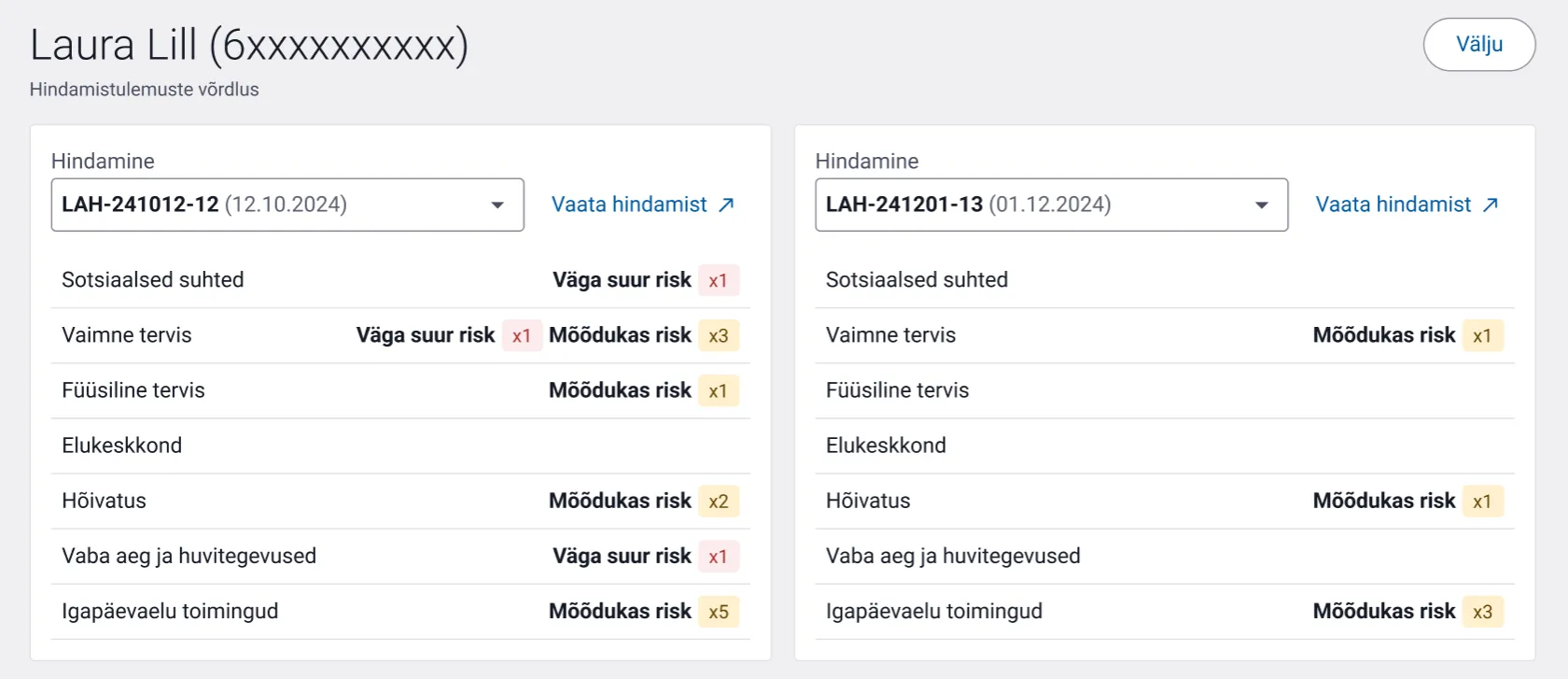
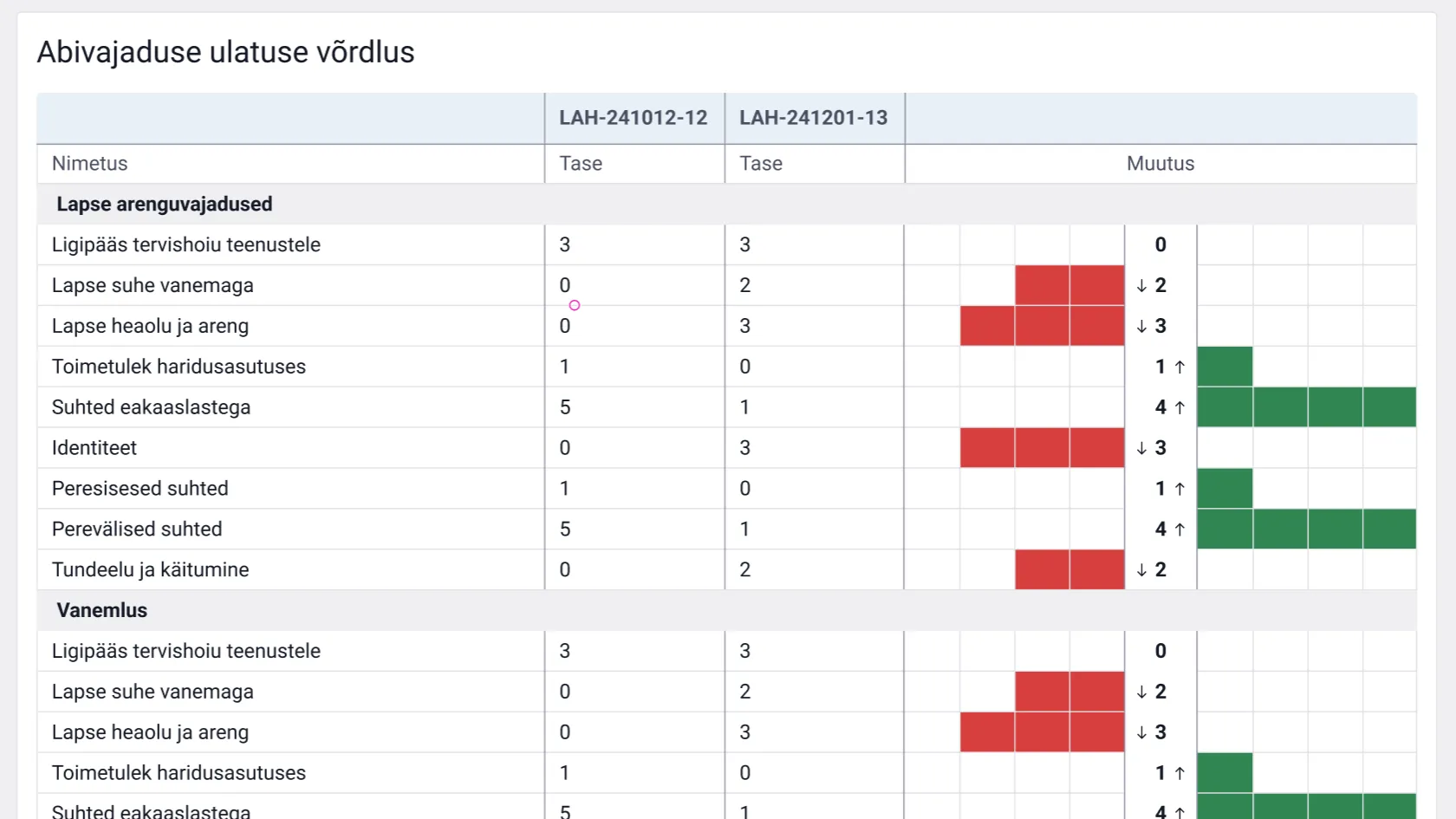
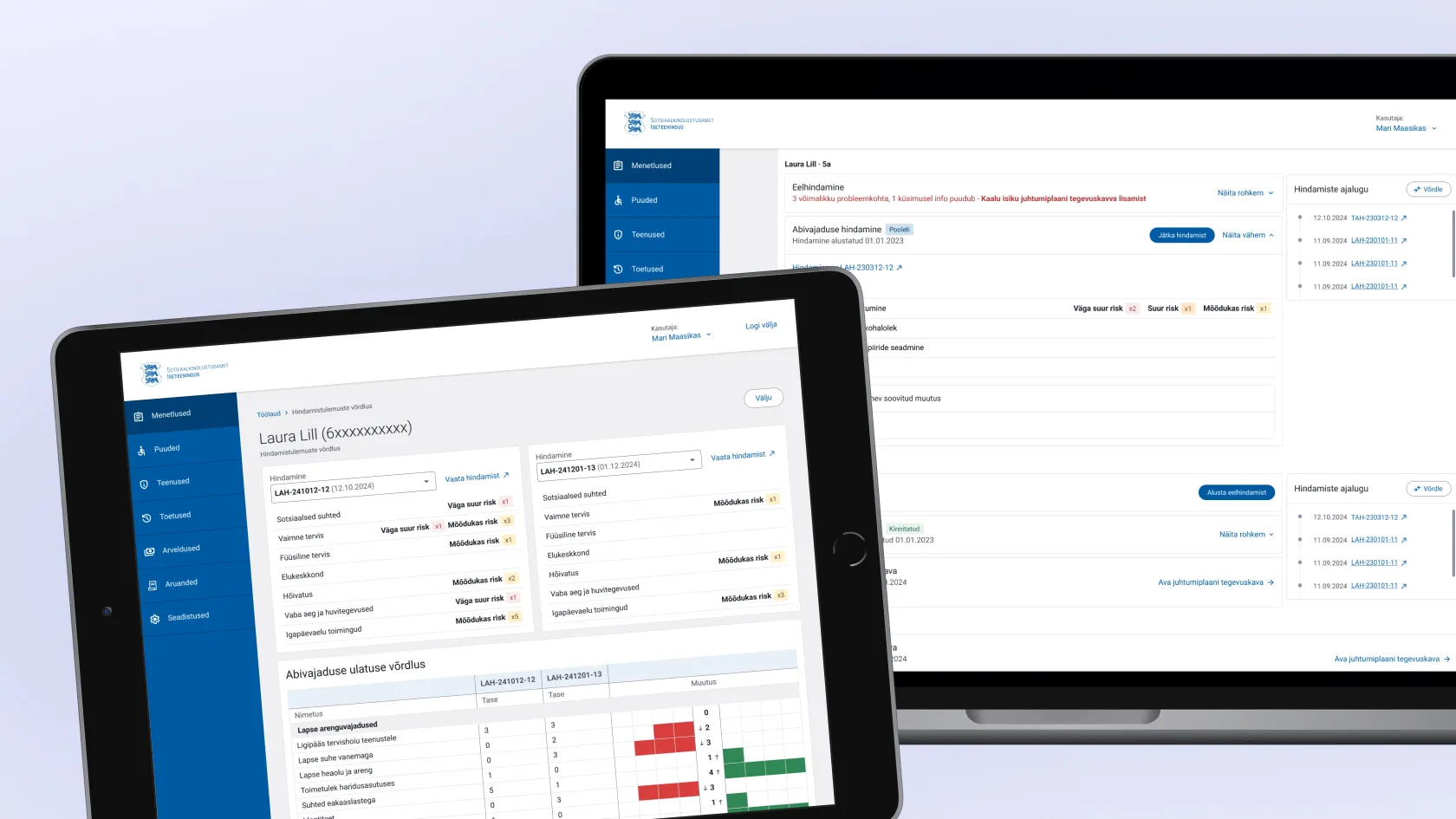
Comparison of the assessment of the need for assistance of two children. STAR screenshot.
A partnership that lasts
Long-term cooperation in the development of STAR means that we are familiar with the system’s background, previous decisions, and development direction. This allows us to make changes that take the whole picture into account, not just one stage of development.
Our analysts, designers, front-end developers, testers, and project manager were involved in the project throughout the entire process, from pre-analysis and design to software development and testing. Such a holistic view helps link user experience, technical architecture, and quality requirements into a single solution.
STAR child protection expert and expert in the Child Welfare Department of the Social Insurance Board, Marie Vildersen, highlights that the development created value both for child protection workers’ day-to-day work and from the perspective of data-driven decision-making:
The development of the assessment of a child's need for assistance and case management creates several important new forms of value, one of the most important being structured data on the needs of children in Estonia.
Based on this data, both the state and local governments will be able to make data-driven decisions in the future. The structured need for assistance assessment tool and the case management functionality enable child protection workers to assess the needs of children in Estonia more effectively and provide children and their families with the support they actually need.
In cooperation with Trinidad Wiseman, it was important that the development focused both on the work processes of specialists and on the long-term sustainability of the solution.
The tools for assessing a child's need for assistance will be available to users in the second half of 2026. Digital services must evolve over time together with the needs of the organisation. It is in the middle of such consistent and substantive changes that partnership has real value.
Read also our previous story about the development of the assessment of adults' need for assistance and how we have moved the development of STAR forward step by step.
The project "Assessment of a child's need for assistance" was developed in cooperation between the Social Insurance Board (SKA), the Health and Welfare Information Systems Centre (TEHIK), and the development partners TripleDev OÜ and Trinidad Wiseman OÜ. Representatives of local governments were also involved in the development process. The project was financed from external funds, from the TAT budget of the Ministry of Social Affairs ("Conditions for granting support for the activities of the implementing agency").
Are you responsible for developing an information system in your organisation?
If you are considering different options or looking for ways to make your workflow clearer, more manageable and less reliant on manual work, get in touch with us. We can help you assess the options and think through the next steps.

Get in touch
We will reply shortly, and our experienced team will ensure that the project will succeed from the very first idea to the final execution.