How ideas turn into code: a glimpse into project management methology
From a high-level perspective, a software development project from the initial idea to the final delivered product is a process, involving tight collaboration between various roles. It's worth mentioning that software development, defined as code, is generally just one part of the whole solution.
The reason is simple: large and impactful projects are inherently complex. This complexity means that not even the most capable individual developer can be expected to encompass the entirety of the scope. The solution lies in a skillset and role-based distribution among specialists.
Similar to manufacturing – there are influencers, analysts and planners, there are executors, and quality controllers. In this article based on a simple example, I'll share experiences and thoughts on the software development process regarding insights to consider when on a journey turning ideas into code.
The evolution and significance of user-centric design
You, like many others, have presumably noticed a strong drive towards user centred design in the last 10-15 years. Web applications, e-marketplaces, and tools we use today are much more intuitively usable and accessible (WCAG). This drive is not accidental, on the contrary it is a very purposeful directed effort.
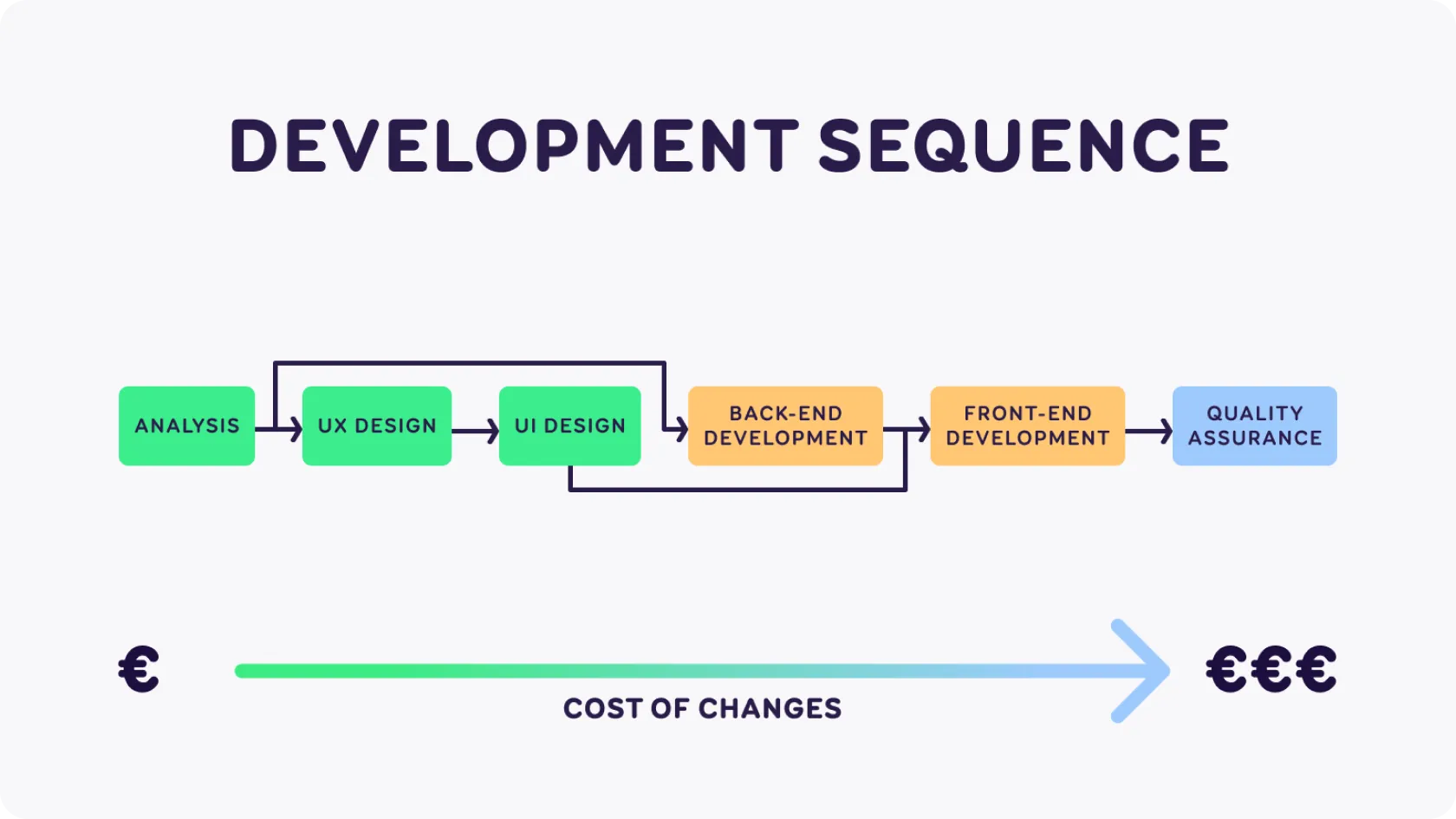
The cornerstone of user centred design is methodical attention to detail, particularly emphasised in the preparatory phases of a project. Such an approach allows development projects to focus on the aspects of most importance and address issues that hold the highest value for end-users. The more resources directed towards gaining purposeful value, the swifter the return on investment.
Great challenges require a methodical approach - let's be agile!
Within a team, roles and specialists are interconnected through continuous and immediate communication. Since the agile approach to development is built around direct communication it is wise to be agile.
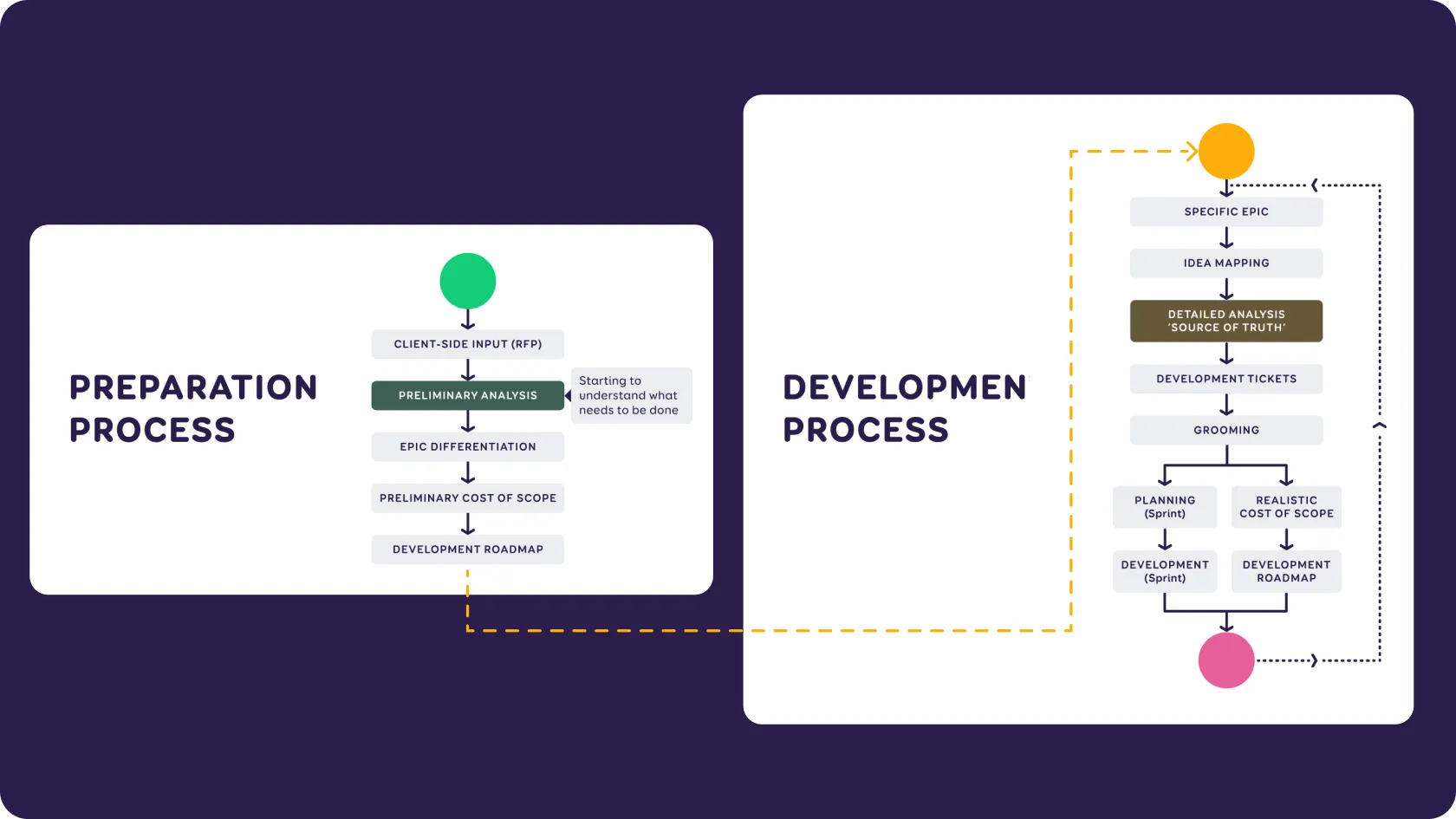
On the journey of bringing an idea to life with code, two larger and related processes must be traversed: the preparation process stage and the development process stage. The preparatory process is traversed once, the development process is repeated iteratively.
- Preparation process
The aim is to address, gather, interview, and analyse the input provided and work to be planned. The end result is a preliminary analysis describing the general nature of the project, business requirements and functionalities. Based on this dataset, it is possible to assess the tasks involved and visualise them in a roadmap. - Development process
The goal is to in detail define, design, estimate, and execute the work. One cycle focuses on one specific development epic and may include multiple development sprints.
In Conclusion
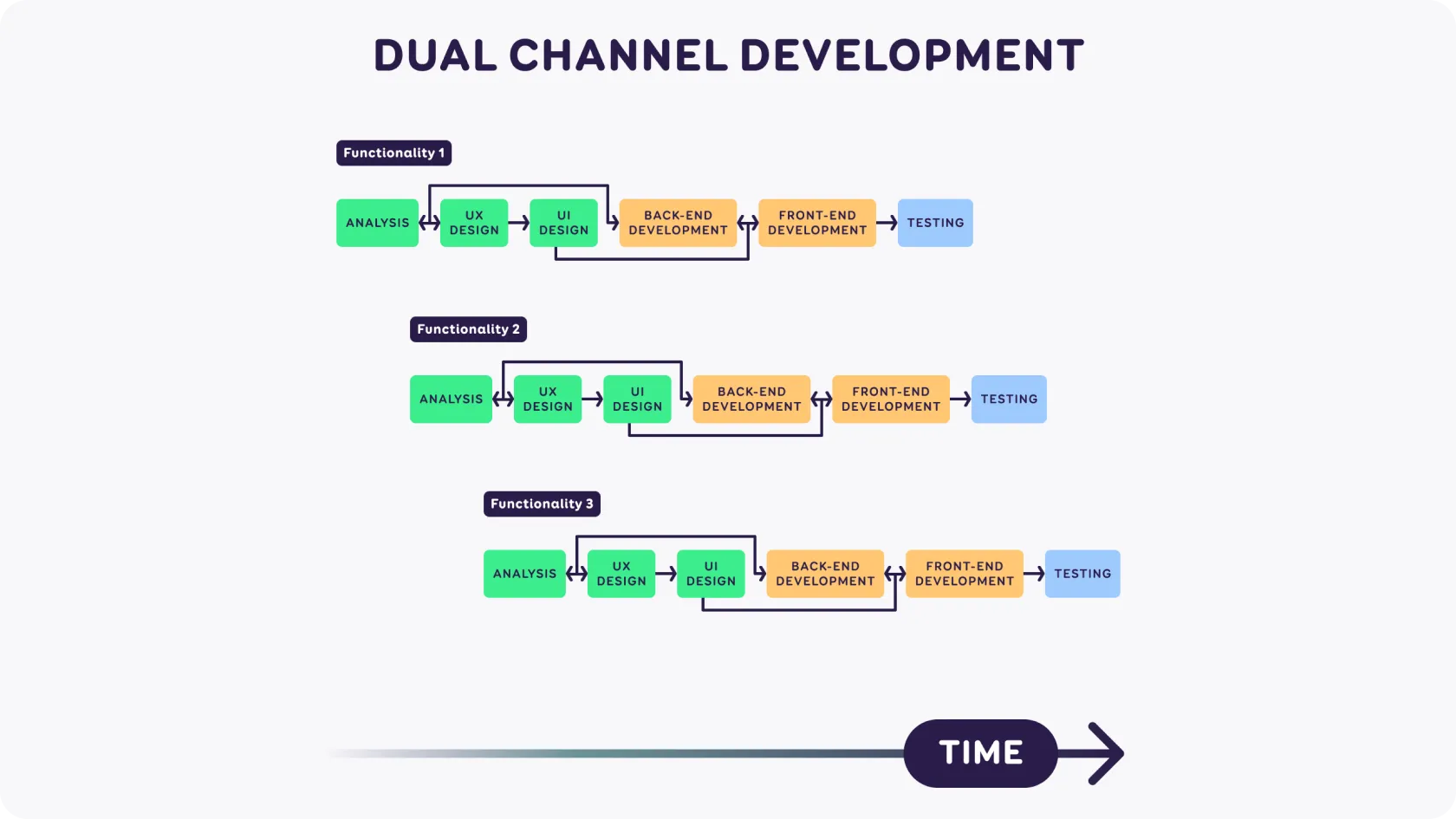
Turning a bold and inspiring idea into code is a process that involves the close collaboration of various individuals and roles. The connection and collaboration between roles can be viewed as a sequence of activities through which user centric functionality is created. Hopefully I have managed to show that through the process of continuous communication and mindful segmentation of tasks even the most complex ideas can successfully be turned into code.
Would you like to discuss your ideas?
You can contact us at any stage of the project - from the development of the idea to the creation and evaluation of new digital solutions.

Get in touch
Write or call, and together, we will find the best way to bring your idea to life. We will reply shortly, and our experienced team will ensure that the project will succeed from the very first idea to the final execution.