How we sought to plan the unplannable, i.e. how we digitized the process of reporting traffic accidents
How are road accidents being dealt with currently?
Many of us might have, at some point, found ourselves involved in a traffic accident. Regardless of the circumstances of any specific accident, it is an extremely stressful situation for anyone - after all, health, money and time are at stake.
Among many other factors, the situation must be recorded, and the collected information must be forwarded to insurance providers. Traditionally, the first step has been the so-called blue-yellow piece of paper called "Traffic Collision Report", where it is possible to draw out the situation in addition to adding text. As a sidenote, filling in this form can also be difficult for drivers with previous filling experience.
Regretfully in its final format the stored information may be incomplete. This leads insurance providers to use the assistance of third parties (eyewitnesses, camera recordings, police officers, etc.) in order to clarify the circumstances of the event.
In an ideal world, this paper document should be readily available to all drivers in traffic. In reality, many find themselves in situations where the unexpected strikes us at a time when the correct forms are out of reach. In such cases the Emergency Response Centre is often contacted for step-by-step instructions.
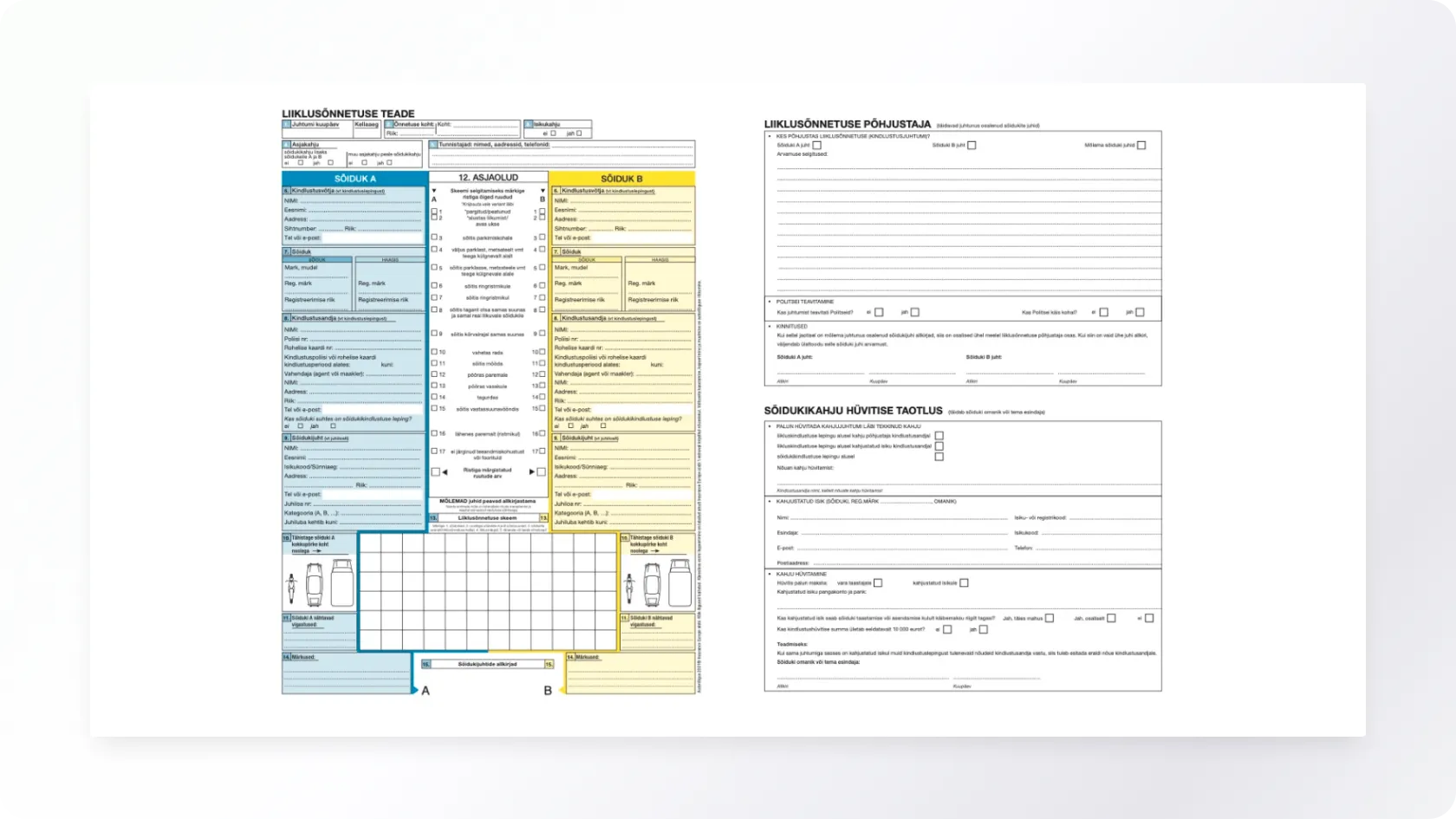
Disadvantages of the existing solution:
- the form is paper specific and thus requires the presence of said form;
- it is often unclear to users which specific case type has taken place and how it should be correctly recorded;
- users' handwriting, style and skills to complete the form are different. Consequently, the quality of the filled form is uneven;
- when drawing up a claim, the parties involved focus more on finding the culprit than on documenting the situation - in the event of a dispute there is not always a fixed point of reference;
- 1 person can complete the form at a time, and there is just one copy. Storing information for multiple parties requires either multiple fill-ins or taking pictures of the original;
- the information filled on the form is static and must, as a rule, be duplicated to the digital format provided by the insurer.
What did we learn?
Ironically, I wish for you, as a reader, to get to know the new application and its solutions provided as little as possible. When starting off your day by sitting behind the wheel of a car, none of us wants to end our journey prematurely and start filling in insurance data.
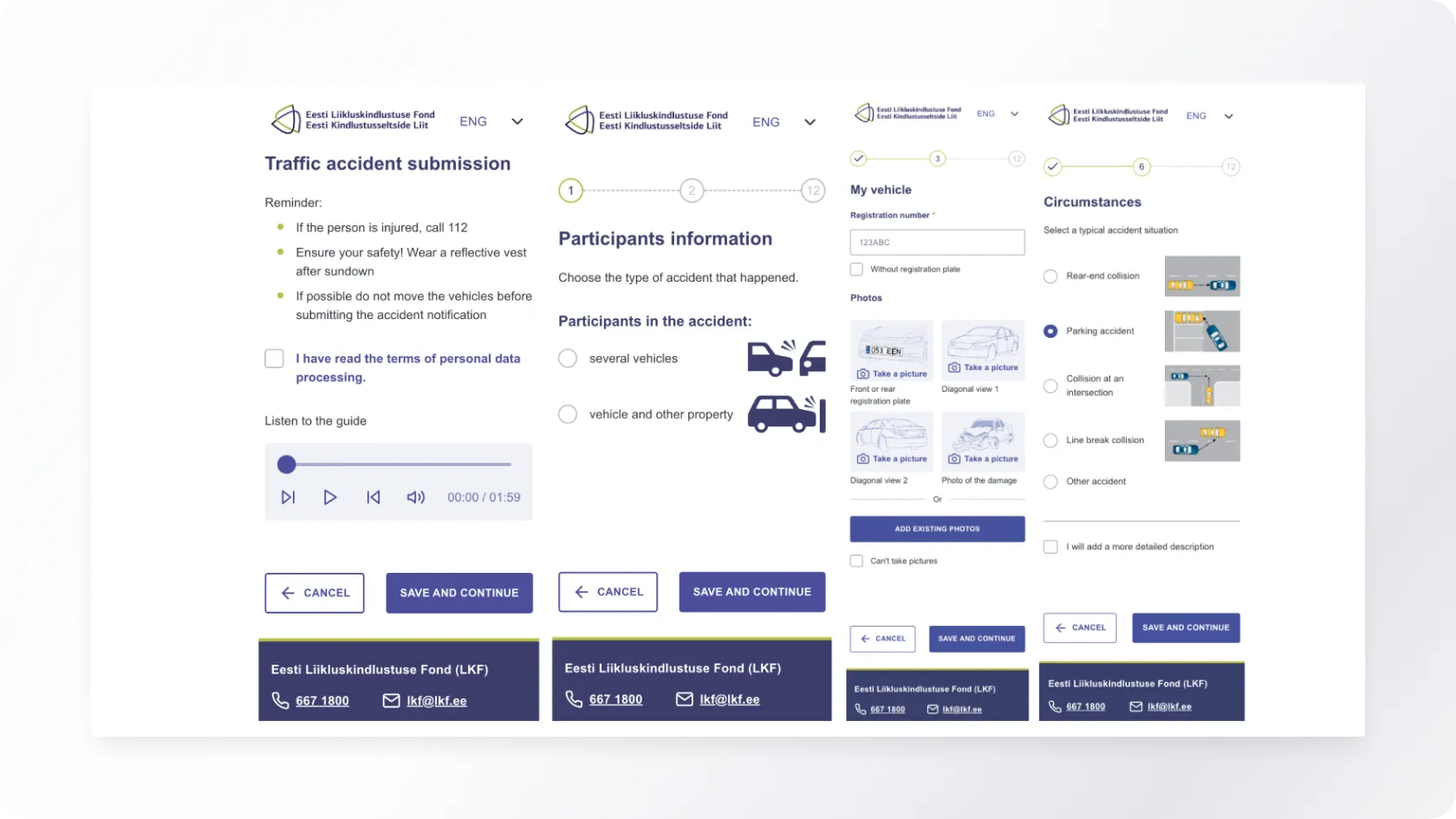
The Estonian Traffic Insurance Fund's "Traffic Accident Notification System" analysis and development required concurrent focus on many everchanging elements. We set a goal is to plan for the unplannable and thus create value for a vast target group of drivers required an approach that was user-centred.
Stressful situations, in turn, require the application to be structured around simple and straightforward elements. Ease of use, connectivity, simplicity and scalability are essential for both the accident participants and the insurance companies tasked to analyze cases.
Would you like to discuss your ideas?
You can contact us at any stage of the project - from the development of the idea to the creation and evaluation of new digital solutions.

Get in touch
Write or call, and together, we will find the best way to bring your idea to life. We will reply shortly, and our experienced team will ensure that the project will succeed from the very first idea to the final execution.