The new functionalities of the Information System of the Labour Inspectorate make it easier for employers to communicate with the state
The Labour Inspectorate is a government agency that strives towards creating a good work environment for every Estonian employee. Since 2019, Trinidad Wiseman has been a development partner for the Information System of the Labour Inspectorate (TEIS) which plays a crucial role in achieving that goal.
During that time, we have developed various important services that facilitate employers’ communication with the Labour Inspectorate and decrease the administrative burden on companies. The self-service of the Labour Inspectorate is a good example of a national information system that is highly valued by both the customer and the end users.
In this post, we will talk more about which processes we have digitalised using TEIS and how that has simplified the everyday lives of the Labour Inspectorate and employers.
Digitalisation decreases administrative burdens
The main goal of the self-service of the Labour Inspectorate is to support employers in creating a good work environment. TEIS facilitates the communication between the Labour Inspectorate and employers and decreases the administrative burden on companies as it enables them to submit information and perform actions in a quick, convenient and paperless way.
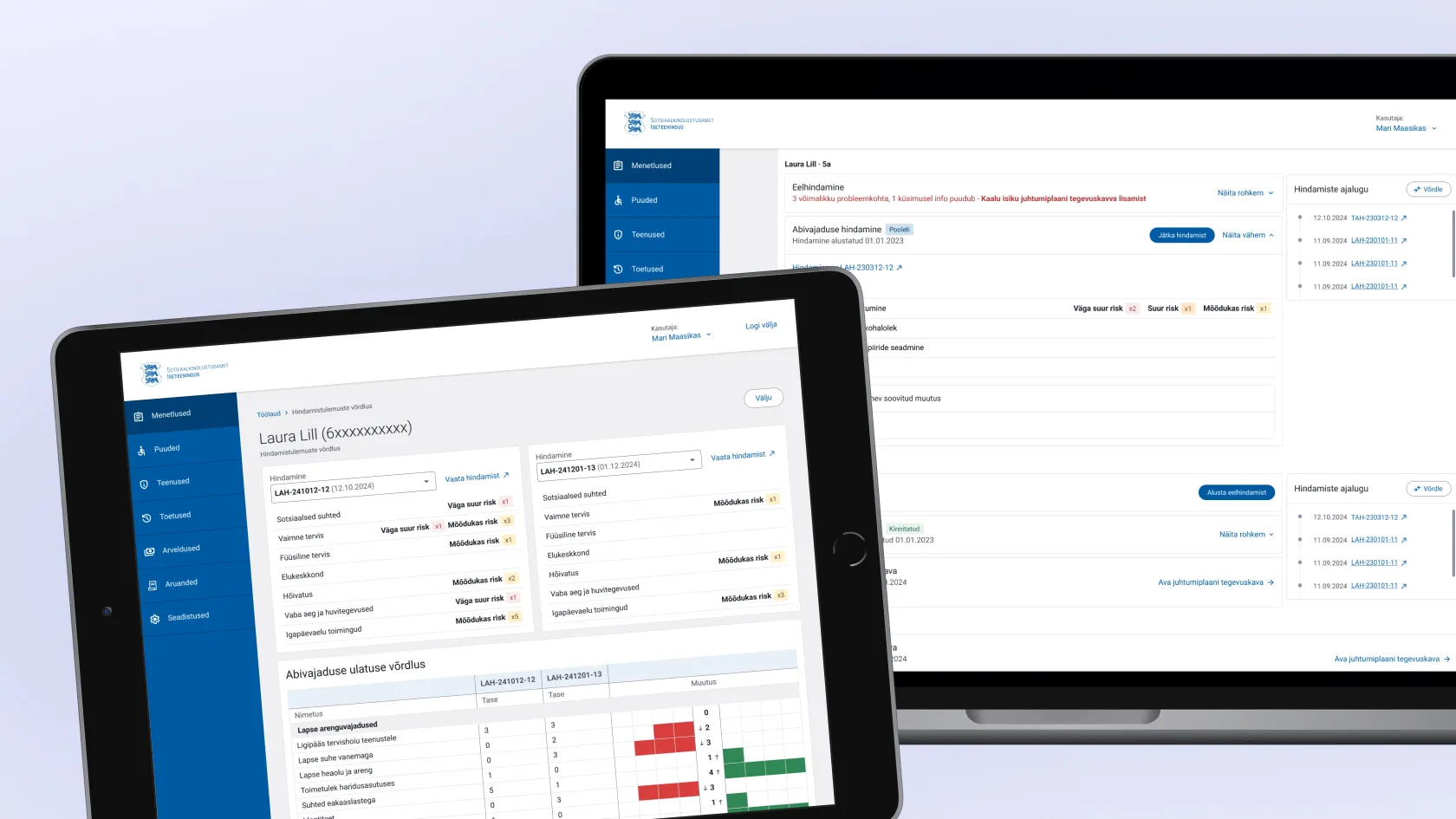
The self-service also allows to map and submit any necessary information regarding employees and their work environment, to plan different risk management activities for work environments, and to communicate with a labour inspector during a supervision procedure. Employees can use TEIS to also see information about themselves and their company.
A digital tool in the self-service environment can be used to conduct and updated risk analyses for companies. The risk analysis tool presents various risk factors and provides advice on how to avoid or decrease specific risks, starting with general work environment problems and ending with field-specific risks. When mapping risks, you must evaluate whether the described risk is present in the organisation or not. If yes, then the tool will display precautions that can be taken to avoid or decrease that risk. Only representatives of the organisation and its employees can see an organisation’s risk analysis, no one else can access that information. The risk analysis module makes it easier and cheaper to evaluate a work environment, especially for microenterprises and small enterprises who have smaller financial resources to order a risk analysis from a service provider. 37 839 companies have already uploaded their risk analyses on the self-service portal. Bigger companies, who have conducted risk analyses before, have simply uploaded it into the portal and smaller ones have conducted theirs using the tool. Altogether, about 72% of companies have submitted the internal risk analysis. In other words, we can say that thanks to this solution, companies have saved around 19 million euros, considering that the average market price for one risk analysis is around 500 euros.
TEIS is comprised of two parts: the officials’ service used by the officials of the Labour Inspectorate, and the self-service used by employers and employees. Both applications are still in development and new functionalities and interfaces with various systems are constantly being added. Additionally, TEIS also includes an open data application that can be used to find information about issued precepts and announcements regarding dispatched employees.
In cooperation with the Labour Inspectorate, TEHIK and TripleDev, Trinidad Wiseman has been working on developing TEIS for seven years already. On average, two new self-service modules have been completed each year and we will take a closer look at the more important ones next.
The new functionalities of the self-service portal
Collaborative agile development across multiple organisations
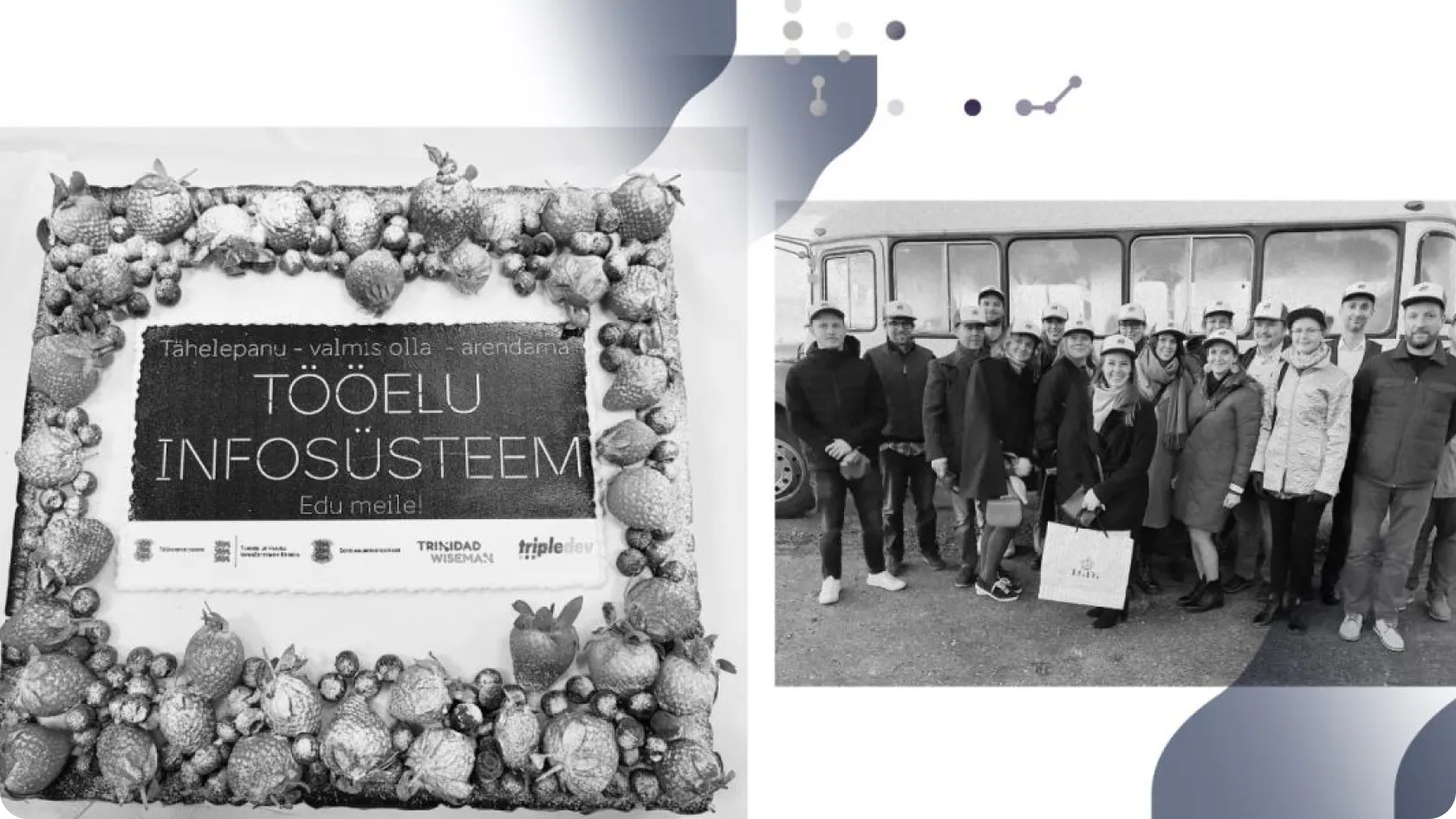
The active team of the TEIS project includes more than 25 people from various organisations. The customer is the Labour Inspectorate and the tenderer is the Health and Welfare Information Systems Centre (TEHIK). TEHIK is the country’s ICT competence centre in the fields of health, social security and labour, providing technical support and managing infrastructures.
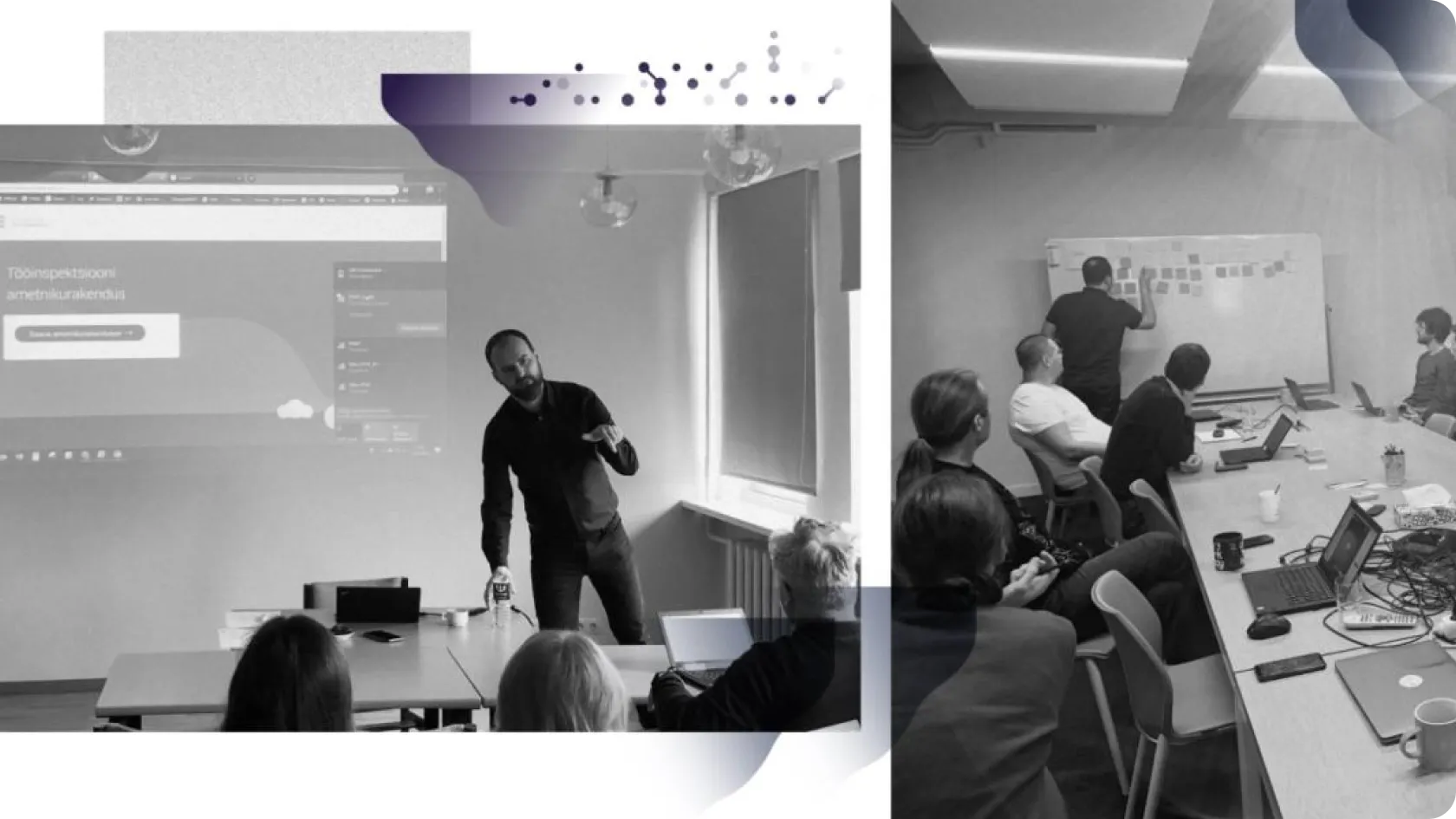
In this project, we follow the principles of agile development. Several times a year, together with the customer, we establish the goals of the development and the roadmap for the next period, which we then use to start working. Since our goal is always to create the best possible service for the end user, then depending on the functionality being developed, that has sometimes meant needing to be flexible about the deadlines if it becomes clear that it is reasonable to do additional development works to achieve a better result.
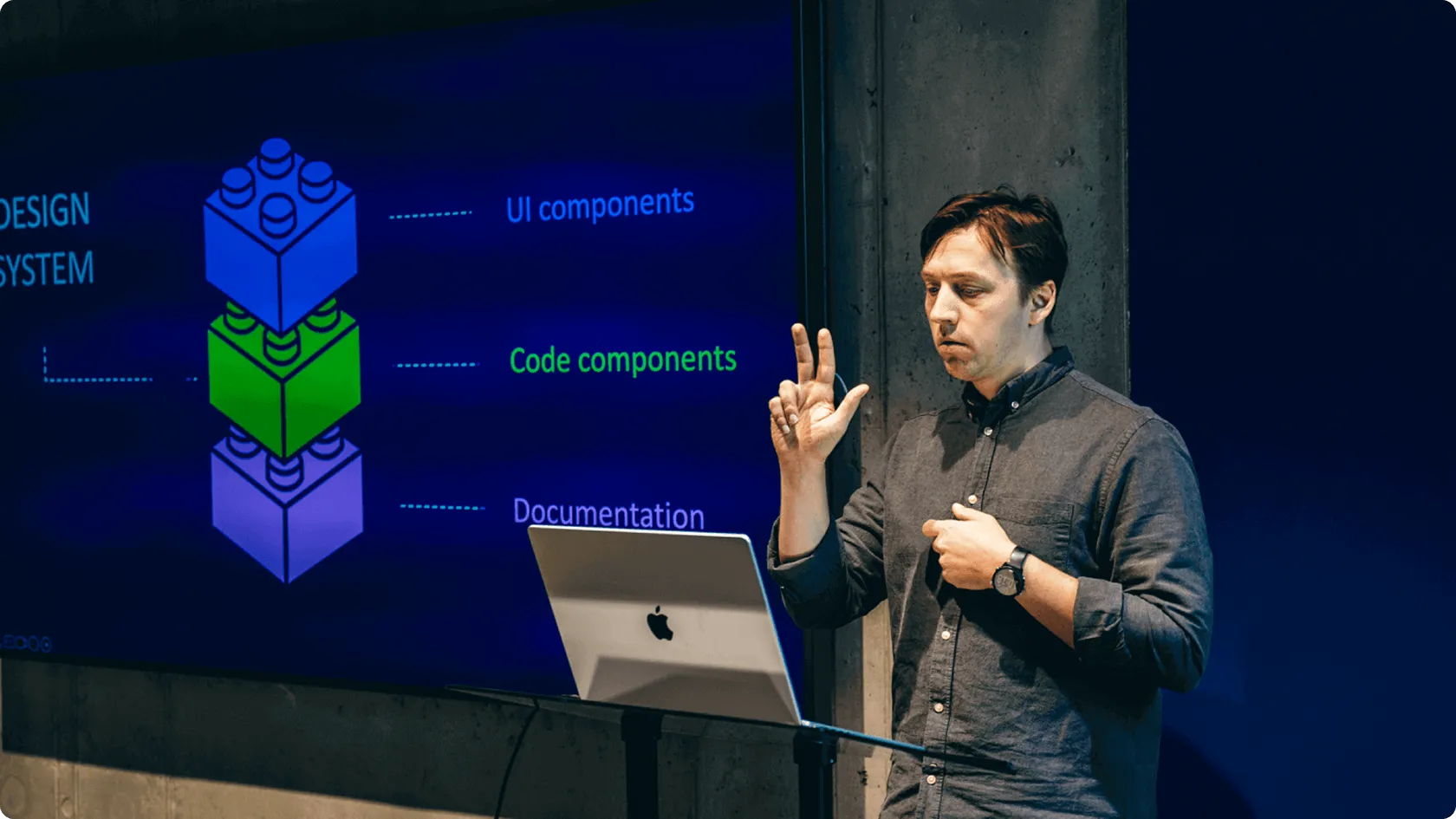
An important part of the development process is design, which helps us get to the best solution and avoid having to do costly revisions in the later stages. The TEIS project also includes a UI/UX designer in the development of every functionality who is responsible for conducting user observations and interviews before we start work on developing the functionality. Cooperation with the end users is extremely important when digitalising and redesigning processes to ensure that the solution actually meets their needs.
The key to success is a united team
TEIS is a system that is highly valued by both the customer and the end users. The reason for that is simple: we have managed to “glue” together people from different organisations into one team with a single goal in common – to make better e-services for the Estonian people.
Another success factor is definitely the customer’s active participation and thinking along with the development process. It is impossible to provide the complete input within the procurement documentation, making it necessary to clarify things on a continuous basis. In these cases, the Product Owner on the customer’s side is responsible for getting the necessary information from their colleagues so that the team could quickly move forward with their tasks.
During the whole project, we have also experienced the customer’s trust towards the development partner and their openness to suggestions on how to technically implement one thing or another.
Working as a united team towards a unified goal requires thought-out communication. Everyone needs to understand which service they are developing and for whom, and what their role is in the development process. Communication has to be constant and the system well-documented in case people change in the project.
Conclusion
The Information System of the Labour Inspectorate is a good example of how it is possible to make daily processes easier, faster and more convenient for a very large target group using an IT system. In cooperation with the Labour Inspectorate and TEHIK, we will continue to develop TEIS to add new functionalities that will facilitate the communication between the state and employers and help employers to create good work environments.
Would you like to discuss your ideas?
You can contact us at any stage of the project - from the development of the idea to the creation and evaluation of new digital solutions.

Get in touch
Write or call, and together, we will find the best way to bring your idea to life. We will reply shortly, and our experienced team will ensure that the project will succeed from the very first idea to the final execution.